If, like me, you like based-on-true-events, up-from-obscurity, fish-out-of-water, or underdog-triumphs movie plots when well executed, you'll love HIDDEN FIGURES. It combines all of those and more. The casting and the performances are so right, there are times when the film almost feels like a documentary, despite the obvious plot-points of a story that may seem predictable, but transcends that with dialogue and performances that make almost every scene resonate with reality.
I was in the military, stationed even further South than the still segregated Virginia the movie takes place in, and during the same period. I rode on segregated buses and got in trouble for sitting in the back instead of up front with my fellow "whites." I refused to drink from the "whites only" drinking fountains, and more. I got run out of the state when the local sheriff insisted to my commander that I be sent away.
Not that I was brave, I was foolhardy actually, endangering the lives of others with my bravado actions, not realizing fully the extent of the brutality of the local racism that could have harmed others on the periphery of my behavior.
HIDDEN FIGURES brought back all the emotions raised when I first encountered official segregation in South Carolina in 1962, and the bravery of the African-American citizens of that time who faced this brutal oppression and violence every day of their existence, as so beautifully portrayed by the three leads in this film—Taraj P. Henson, Octavia Spencer and Janelle Morae—with special kudos to Henson for an almost movie-stealing performance.
Other performers worth noting: Kevin Costner, Kristen Dunst (in a tour-de-force performance of a clueless racist's transformation), Jim Parsons and Mahershala Ali. Well worth watching.
Tuesday, February 7, 2017
Monday, February 6, 2017
MARTA BECKET R.I.P.
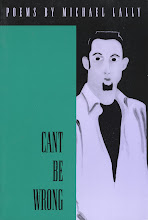
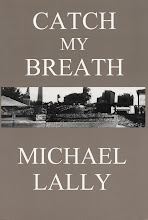
This is the cover of a book-length poem I wrote c. 1990, with a reproduction of a postcard photograph of one of the most inspiring creative artists I've ever encountered or heard about: Marta Becket. There are sections in the poem that describe my experience making a movie in Death Valley over a period of weeks, during which the cast and crew stayed at the hotel Becket had revived and painted murals in all the rooms and hallways of, but had never let anyone stay in until us.
It was part of a bracket-shaped set of connected buildings in Death Valley Junction, a crossroads in the middle of nowhere that had been totally abandoned except for a gas station that would also soon be deserted when Becket and her then male companion and partner stopped to get a tire fixed in 1967 when she was a dancer touring the country doing one-woman shows, often in colleges paid for by student funds that were at that moment beginning to dry up for cultural entertainment like Becket's.
While the tire was worked on, she wandered into an end building that had been used for a hall for workers meetings and I believe even church services back in the days of borax "mining" (more like collecting) when the hotel section housed visitors stopping over during train rides from the East Coast to L.A. But in 1967 was falling apart, with holes in the ceiling and warped floors etc. She decided on the spot to make this crossroads her home and did.
She restored the hall, turning it into a theater she named The Amargosa Opera House, where she performed her one-woman show (later with the help of a male companion who acted as her comic foil). Because in the early years of this venture her shows often were performed with no audience, she painted the walls of the theater with murals depicting a packed house made up of Spanish royalty of the 1600s, jugglers and other entertainers, and the less royal, including Native "Americans" brought back to Spain.
It was one of the most amazing places I'd ever been, and her show one of the most uniquely inspiring. When I was there the audiences were packed with visiting gray-haired tourists from Las Vegas and beyond who arrived in tour buses, a result of the attention she garnered after Natioanl Geographic had done a short documentary about Becket her theater and her one-woman show. She was in her late sixties when I saw her dance ballet on point (as well as other types of dance), with the most beautifully articulated movements and poses, and then after the show sit on the edge of the stage to sign autographs and/or books and art work sold in a little shop attached to the theater.
She was obviously multi-talented and a true original. Perhaps the purest artist I ever met to heard of. She was 97 at her death, and had lived life on her terms, ignoring the rest of the world's standards and limitations for what an older woman should do with her life, or anyone for that matter. If you never heard of her, go find out who she was and what she did (Starting perhaps with the pretty good NY Times and L.A. Times obits here and here).
It was part of a bracket-shaped set of connected buildings in Death Valley Junction, a crossroads in the middle of nowhere that had been totally abandoned except for a gas station that would also soon be deserted when Becket and her then male companion and partner stopped to get a tire fixed in 1967 when she was a dancer touring the country doing one-woman shows, often in colleges paid for by student funds that were at that moment beginning to dry up for cultural entertainment like Becket's.
While the tire was worked on, she wandered into an end building that had been used for a hall for workers meetings and I believe even church services back in the days of borax "mining" (more like collecting) when the hotel section housed visitors stopping over during train rides from the East Coast to L.A. But in 1967 was falling apart, with holes in the ceiling and warped floors etc. She decided on the spot to make this crossroads her home and did.
She restored the hall, turning it into a theater she named The Amargosa Opera House, where she performed her one-woman show (later with the help of a male companion who acted as her comic foil). Because in the early years of this venture her shows often were performed with no audience, she painted the walls of the theater with murals depicting a packed house made up of Spanish royalty of the 1600s, jugglers and other entertainers, and the less royal, including Native "Americans" brought back to Spain.
It was one of the most amazing places I'd ever been, and her show one of the most uniquely inspiring. When I was there the audiences were packed with visiting gray-haired tourists from Las Vegas and beyond who arrived in tour buses, a result of the attention she garnered after Natioanl Geographic had done a short documentary about Becket her theater and her one-woman show. She was in her late sixties when I saw her dance ballet on point (as well as other types of dance), with the most beautifully articulated movements and poses, and then after the show sit on the edge of the stage to sign autographs and/or books and art work sold in a little shop attached to the theater.
She was obviously multi-talented and a true original. Perhaps the purest artist I ever met to heard of. She was 97 at her death, and had lived life on her terms, ignoring the rest of the world's standards and limitations for what an older woman should do with her life, or anyone for that matter. If you never heard of her, go find out who she was and what she did (Starting perhaps with the pretty good NY Times and L.A. Times obits here and here).
Sunday, February 5, 2017
TIME TO CHANGE THE MESSAGE
Which, unfortunately, lately seems to be liars and cheaters end up winners. Time to put an end to that.
Saturday, February 4, 2017
ARRIVAL
I'm at a loss as to why this film garnered so many nominations and awards already (especially when there are so many other deserving yet unrecognized films this year). I found it pretty much unmemorable. There's good actors in it, and a well-intentioned script (though full of inconsistencies and forced plot-device coincidences, etc.), but ultimately the writing, direction, editing, and cinematography added up to nothing exceptional in the service of a story that is supposed to be uniquely exceptional.
Friday, February 3, 2017
Thursday, February 2, 2017
MY IMMIGRANT GRANDFATHER
There's a photo of my paternal grandfather from the turn of the century (19th to 20th) in one of those keystone cops high rounded police helmets, but I can't find that at the moment, so here's one I've posted before and assume he gave to my grandmother, also an Irish immigrant, with a sweet sentiment. Partly what upsets me about the news commentators and others on the new "administration"'s "ban" is no one mentioning that The Founding Father documents mention the presence even then of Jewish, Muslim and non-believers in the country and accepts them as fellow citizens, meaning that there are Jewish, Muslim and atheist citizens of the USA whose ancestors were here generations before mine...and probably yours...
Wednesday, February 1, 2017
20TH CENTURY WOMEN
I was unsure what to expect with this film, and for good reason, it's not an easy movie to summarize in the usual glib "pitch" or ad. But it was worth seeing. Some good acting and interesting editing and pacing and writing (possibly accidental or unintended, but for me the rhythm of this flick seemed almost unique—a mini-trend in the movies of 2016, in terms of narrative drive being unexpectedly unpredictable, MOONLIGHT being at the top of that short list).
Annette Bening continues to rival Meryl Streep in range and longevity (if not in accents) at least in terms of the emotional spectrum if not in extremes of character types (no one beats Streep there). But as in JACKIE, the real pillars of understated realism were the performances of Greta Gerwig and Billy Crudup (watch JACKIE and 20TH CENTURY WOMEN back to back and they'll seem like contenders in the who-can-transform-themselves-most-from-role-to-role competition, partly physically but mostly character-wise).
Also recommended if you lived through the transition from Carter to Reagan (foreshadowing our current situation). Carter's supposed "malaise" speech is partly shown as part of the plot and his prescience in it almost made me cry for our missed opportunity to better prepare for the future that is now.
Annette Bening continues to rival Meryl Streep in range and longevity (if not in accents) at least in terms of the emotional spectrum if not in extremes of character types (no one beats Streep there). But as in JACKIE, the real pillars of understated realism were the performances of Greta Gerwig and Billy Crudup (watch JACKIE and 20TH CENTURY WOMEN back to back and they'll seem like contenders in the who-can-transform-themselves-most-from-role-to-role competition, partly physically but mostly character-wise).
Also recommended if you lived through the transition from Carter to Reagan (foreshadowing our current situation). Carter's supposed "malaise" speech is partly shown as part of the plot and his prescience in it almost made me cry for our missed opportunity to better prepare for the future that is now.
Subscribe to:
Comments (Atom)