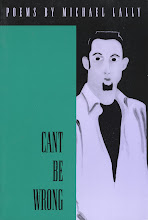
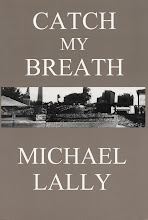
A week ago Sunday I read some of my poetry in my home town, in an old building we used to call “the community center” and was falling apart when I was a kid. It’s since been gentrified, as has a lot of other stuff around town.
The reading took place in a room that housed pool tables and tough guys back in the 1940s and ‘50s, and is now an art gallery. The whole place is called the Baird Center, after someone who must have come along after I left home.
I read with several local poets, all different and all good, and then after an intermission there was an “open mic” which in the old days, c. 1970s and ‘80s, used to mean cranks ranting and amateur poets rhyming like greeting cards and mostly just horrible stuff, or at least very weak writing.
But everyone of the handful who read that day were terrific, equal to if not better than the “featured” poets! And that’s been my experience in recent years.
I’ll go to a local music event with a bunch of musicians and singers performing their own songs, or covering more famous tunes, and expect to be bored or disappointed as I often was in decades past, but instead will come away feeling like I just experienced one of the greatest musical evenings of my life!
And the same with the group poetry readings I’ve taken part in reluctantly, or gone to watch because a student or friend is reading. Every time I have been pleasantly surprised by the quality of the work.
Now maybe that’s just because—what?—people are getting better educated or trained or something than they were twenty or thirty years ago or more? I don’t think so.
I think it has more to do with population growth, which is the point of where I started this thing (but because of the rotten cold I’m suffering through, with a head that feels like concrete, I’m probably not being as clear as I otherwise might be).
If one percent of the population were fine poets then, and the same percentage now, it stands to reason that the one percent would have exponentially grown as a result of population growth.
In the early decades of the 20th century, there were a handful of “modernist” poets who created a variety of new approaches to creating a poem. They all knew each other, and most even had some kind of friendship or other intimate relationship. And it wasn’t difficult to keep track of them.
The number of magazines where their work was published were few, the venues where they read their work, few as well.
By mid-century, when I was a teenager just starting to present my poetry and other creative output to the world, there were a handful of “movements” or “schools” (ala Donald Allen’s breakthrough anthology THE NEW AMERICAN POETRY, with “Beats” “Black Mountain” “New York School” etc.).
A lot of these poets knew each other as well, but there were a lot more of them, publishing their poems in a lot more “little magazines” and reading them in a lot more venues than their modernist predecessors.
By the 1970s, there were tons more little magazines than in the 1950s and ‘60s, and more groupings of poets, many more poets period, than there had been mid-century.
Some people ascribe that explosion of poetry and poets to the growth of university creative writing workshops that give out MFAs in poetry etc., beginning with the granddaddy of them all at the University of Iowa.
In the 1960s, I ended up at the U. of Iowa Writers Workshop on the G. I. Bill, where I learned more from my fellow students than from professors—from Nathan Whiting to Ray DiPalma, Steve Shrader to Robert Slater (Steve just passed away a few months ago in Hawaii where he lived and wrote for most of his life after Iowa).
Many of them went on to teach in various MFA programs, and thereby contributed to the growth of what some call “the poetry industry.”
I taught for a while at a college in DC, not in an MFA program, but I did teach creative writing, and some of my students went on to become fulltime poets (e.g. Tina Darragh), but when I arrived in DC there were no regular poetry reading series. I started, or helped start, a few. I’m sure there are even more now.
In this first decade of the 21st Century, there are twice as many people in this country, or more, than there was c.1975. It would be a shock if there weren’t many more poets and poetry programs and degrees and magazines and books etc.
It also stands to reason that if the usual handful of poets—or artists or singer/songwriters etc.—get the attention of the mass media (under the control of a handful of corporations), there are a lot more worthy works of art not being noticed in that old fashioned big media way.
But thanks to the internet, people can get their work out a lot easier than by cranking up a mimeograph machine and then hand delivering their little mag or chapbook etc.
Though there still are too many, especially among the young, who buy into the idea of “success” in the arts being related to media attention and financial rewards, there seems to me to be a genuine movement away from that, and forward to a place where what matters is doing the work and getting it out there to anyone who might dig it, and “get” it, and respond to it.
A return in a way to those modernist poets of early 20th century, with their small gatherings and handful of publications and readings in small venues. Only now, there are multiple groups like that, all over the map, and though maybe not as innovative, nor with as lasting an impact on style and form etc., nonetheless still capable of the kind of impact poetry that works has always had on audiences, and did on me as a kid and young man.
So I’m happy to see ever more poets and musicians and bands and films and all kinds of art and artists, which hopefully are doing for kids what the arts did for me, making me feel like it was saving my life, and continuing to make me feel that right up until this moment.
Tuesday, May 8, 2007


Monday, May 7, 2007
TOO MANY?—Part Two
The Internet seems to me to have been inevitable. If it hadn’t been the internet it would have been something else.
The old methods of getting your work out to people, or connecting with people, just can’t hold up when there’s so many more people.
The way I see it, the mentality—spread by the growing use of the internet—to display, or share, one’s personality or artistic creations, or thoughts or etc. is not just a result of the democratization of distribution that the internet at least appears to represent and support, but also a result of there being so many more people in the world that therefore there's so much more work being created and ideas being generated.
So the world’s standards of “success” can’t matter as much, when there are thousands of small audiences for thousands more “artists.”
This may not be the best example, but it seems relevant to me that Sunday’s New York Times has an article on Parker Posey—the independent film world’s biggest female star in many ways—and it is written as if there’s a strong possibility people—especially Hollywood people, but even the rest of us—might see her as a “failure” because she isn’t as widely known or as financially rewarded as, say, Sandra Bullock!
I don't know about you, but I don’t care about what level of attention she gets from the mass media (the only reason they have an article on her in the Times is because she has two new movies coming out, and though “independent” they’re still multi-million dollar movies distributed the usual Hollywood ways).
What I care about is “the work”—how her performance resonates in the story of the film and comes across to me, watching it.
It stands to reason that if there is, at least, one-and-a-half times as many people in this country as when Posey first appeared in films, there’s also that many more actresses with great talent. But there is only room at the top for the usual handful, the ones that the corporations that run the film industry believe can bring in audiences in the millions and the profits that go with that.
Meanwhile, there's the need for the increased amount of talent to express itself and for audiences to have more choices since there's so many more of us. So, it isn’t like there’s too many people trying to make movies or be in them, there’s probably just the right amount given the size of the population, but the old means of reaching audiences for them is no longer relevant. Ergo YouTube.
It feels to me like a shift back to the old “cutting edge” scene kind of relationship between audience and performer or artist and appreciator or writer and reader etc.
E. g., Two Fridays ago, I went to a concert in the library in Canaan. Connecticut.
It was my daughter’s idea. I was staying at her place not far from Canaan. With us was her four-year-old daughter—my granddaughter—and my nine-year-old son, my daughter’s youngest sibling.
There were maybe twenty people in a little room stuffed with stuffed animals and birds. A mix of types (both stuffed and among the audience) from loner-bearded-longhaired-aging hippie, or warm-hearted-but-intimidating-looking-heavily-tattooed lesbian with an another less flamboyant woman, to straight-looking white couples with their shy children, etc.
What struck me most, though, was that the singer/songwriter appearing amidst all this, with her electric guitar and electric “banjotar”—Janet Robin—performed such an intensely energetic and forcefully entertaining show to such a small roomful of disparate people.
She was great. A delightful surprise to me, though my daughter suspected I’d dig her, which is why she wanted me to join her. My daughter knew Robin a little in California decades ago, and they recognized each other last time Robin came to town for a similar concert.
But what impressed itself on my mind was how back in the mid to late 20th Century, a gig like that would be way down the list of possibilities for a musician, let alone songwriter, as talented as Robin.
It reminded me more of the typical poetry reading gig, especially the library setting (although the stuffed-creatures room was a bit of an anomaly). But rather than seeing it as a sign of lack of success, Robin saw it as a great opportunity and gave a show that expressed her joy and gratitude to be in a small venue where everyone in the folding seats was there for just one reason, to listen to her.
She had recently performed in one of the major clubs in the area, The Helsinki in Great Barrington. But there, where the admission is high and the bar is busy and people have other agendas than just music appreciation, like finding their next date or scoring with the one they’re on, Robin felt it was fun, but not as satisfying as the little library gig.
And she was right from my perspective. People in the audience responded to her chatter between songs, asking questions or answering hers, or commenting on what she was saying (e.g. when she mentioned there not having been a lot of female guitar virtuosos in the old days, I mentioned Memphis Minnie, who happened to be a favorite of my daughter’s mother, long deceased, and Robin responded to my comment by saying “We’ll get to her later” because, as fate would have it, the only song she performs that wasn’t written by her, is one of Memphis Minnie’s!).
My point here isn’t that the show was great, but that it corresponded perfectly with my own theories about “success” in the arts and otherwise. I never much catered to the typical standards the world seemed to hold in judging “success”—my thing was always how contented I was, how much time I had, and have, to do my writing and reading and other artistic pursuits (even if it’s only catching up with new movies and music).
The “arts” saved my life, particularly poetry, so, they were always the main religion in my personal experience. But even I got caught up over the years, particularly in my 30s and 40s, with the world’s concept of success, and tried hard, or as hard as my preferences and sense of well-being could tolerate, to have that kind of success.
But eventually I settled back into my original belief that what mattered was the work, and doing it, and if anyone noticed and not only appreciated it but “got” it, that was a bonus.
So when others would assess someone’s artistic “career” based on audience size, or financial success, or amount of media attention, I would disagree and try to get them to see, that whatever that was about, it often had nothing to do with the quality of the work and more to do with politics and financial considerations and groupthink etc.
Now, the 21st century seems to be swinging my way. And the reason is, as I see it, population growth.
If the mass media and mass venues can only support a few “top acts” that can bring in the necessary audience to generate the millions needed to make a profit, but the population continues to grow exponentially, then naturally there is, and will be, a need for many more small, more intimate venues, based more on word of mouth (often via the internet) than mass media attention.
Just like the good old days. Only with more or less new ways. Like, as Robin mentioned, “house concerts” where a performer will come to your home, if you guarantee a certain size audience paying enough to make it worthwhile, like sometimes as little as thirty dollars, to hear and see and experience someone who’s work you dig up close in the intimacy of a home.
I know this has been going on for ages with rich people, hiring chamber orchestras or jazz combos to liven up their parties. But in those cases, it was the elitism of wealth, and the performers were paid for by the party giver, like the wealthy Beverly Hills matrons who get Usher to perform at their son’s bar mitzvah.
And poorer folks, including musicians, would throw “rent parties” during The Great Depression where musicians would perform and people would donate in a passed hat and hopefully the rent would be made.
Or similar scenes in the 1970s in the downtown lofts of what became known as “Tribeca” where dancers and performance artists and composers etc. would use their own lofts for performances and concerts and us locals would show up and throw some money in a hat, or pay a small fee at the door, so they could make their rent.
But what Robin was talking about is a more recent phenomenon, where a small group of people, individually contribute a small amount to have someone less expensive but just as good or better than a “star” come to their home for a private concert or reading or performance.
Man that appeals to me. I always felt enormously uncomfortable at the few mass audience events I went to back in the ‘80s, even when the seats were complimentary and up front (the exception being the few times I knew someone in the band well enough to be backstage, watching from the wings, that could be pretty exciting).
But someone’s home, with a small audience of friends, digging some talent that is willing to work under those circumstances for not a lot of money but because the venue is so intimate it fosters such attentive audiences that it’s rewarding in and of itself, let alone whatever money can be made.
The Internet seems to me to have been inevitable. If it hadn’t been the internet it would have been something else.
The old methods of getting your work out to people, or connecting with people, just can’t hold up when there’s so many more people.
The way I see it, the mentality—spread by the growing use of the internet—to display, or share, one’s personality or artistic creations, or thoughts or etc. is not just a result of the democratization of distribution that the internet at least appears to represent and support, but also a result of there being so many more people in the world that therefore there's so much more work being created and ideas being generated.
So the world’s standards of “success” can’t matter as much, when there are thousands of small audiences for thousands more “artists.”
This may not be the best example, but it seems relevant to me that Sunday’s New York Times has an article on Parker Posey—the independent film world’s biggest female star in many ways—and it is written as if there’s a strong possibility people—especially Hollywood people, but even the rest of us—might see her as a “failure” because she isn’t as widely known or as financially rewarded as, say, Sandra Bullock!
I don't know about you, but I don’t care about what level of attention she gets from the mass media (the only reason they have an article on her in the Times is because she has two new movies coming out, and though “independent” they’re still multi-million dollar movies distributed the usual Hollywood ways).
What I care about is “the work”—how her performance resonates in the story of the film and comes across to me, watching it.
It stands to reason that if there is, at least, one-and-a-half times as many people in this country as when Posey first appeared in films, there’s also that many more actresses with great talent. But there is only room at the top for the usual handful, the ones that the corporations that run the film industry believe can bring in audiences in the millions and the profits that go with that.
Meanwhile, there's the need for the increased amount of talent to express itself and for audiences to have more choices since there's so many more of us. So, it isn’t like there’s too many people trying to make movies or be in them, there’s probably just the right amount given the size of the population, but the old means of reaching audiences for them is no longer relevant. Ergo YouTube.
It feels to me like a shift back to the old “cutting edge” scene kind of relationship between audience and performer or artist and appreciator or writer and reader etc.
E. g., Two Fridays ago, I went to a concert in the library in Canaan. Connecticut.
It was my daughter’s idea. I was staying at her place not far from Canaan. With us was her four-year-old daughter—my granddaughter—and my nine-year-old son, my daughter’s youngest sibling.
There were maybe twenty people in a little room stuffed with stuffed animals and birds. A mix of types (both stuffed and among the audience) from loner-bearded-longhaired-aging hippie, or warm-hearted-but-intimidating-looking-heavily-tattooed lesbian with an another less flamboyant woman, to straight-looking white couples with their shy children, etc.
What struck me most, though, was that the singer/songwriter appearing amidst all this, with her electric guitar and electric “banjotar”—Janet Robin—performed such an intensely energetic and forcefully entertaining show to such a small roomful of disparate people.
She was great. A delightful surprise to me, though my daughter suspected I’d dig her, which is why she wanted me to join her. My daughter knew Robin a little in California decades ago, and they recognized each other last time Robin came to town for a similar concert.
But what impressed itself on my mind was how back in the mid to late 20th Century, a gig like that would be way down the list of possibilities for a musician, let alone songwriter, as talented as Robin.
It reminded me more of the typical poetry reading gig, especially the library setting (although the stuffed-creatures room was a bit of an anomaly). But rather than seeing it as a sign of lack of success, Robin saw it as a great opportunity and gave a show that expressed her joy and gratitude to be in a small venue where everyone in the folding seats was there for just one reason, to listen to her.
She had recently performed in one of the major clubs in the area, The Helsinki in Great Barrington. But there, where the admission is high and the bar is busy and people have other agendas than just music appreciation, like finding their next date or scoring with the one they’re on, Robin felt it was fun, but not as satisfying as the little library gig.
And she was right from my perspective. People in the audience responded to her chatter between songs, asking questions or answering hers, or commenting on what she was saying (e.g. when she mentioned there not having been a lot of female guitar virtuosos in the old days, I mentioned Memphis Minnie, who happened to be a favorite of my daughter’s mother, long deceased, and Robin responded to my comment by saying “We’ll get to her later” because, as fate would have it, the only song she performs that wasn’t written by her, is one of Memphis Minnie’s!).
My point here isn’t that the show was great, but that it corresponded perfectly with my own theories about “success” in the arts and otherwise. I never much catered to the typical standards the world seemed to hold in judging “success”—my thing was always how contented I was, how much time I had, and have, to do my writing and reading and other artistic pursuits (even if it’s only catching up with new movies and music).
The “arts” saved my life, particularly poetry, so, they were always the main religion in my personal experience. But even I got caught up over the years, particularly in my 30s and 40s, with the world’s concept of success, and tried hard, or as hard as my preferences and sense of well-being could tolerate, to have that kind of success.
But eventually I settled back into my original belief that what mattered was the work, and doing it, and if anyone noticed and not only appreciated it but “got” it, that was a bonus.
So when others would assess someone’s artistic “career” based on audience size, or financial success, or amount of media attention, I would disagree and try to get them to see, that whatever that was about, it often had nothing to do with the quality of the work and more to do with politics and financial considerations and groupthink etc.
Now, the 21st century seems to be swinging my way. And the reason is, as I see it, population growth.
If the mass media and mass venues can only support a few “top acts” that can bring in the necessary audience to generate the millions needed to make a profit, but the population continues to grow exponentially, then naturally there is, and will be, a need for many more small, more intimate venues, based more on word of mouth (often via the internet) than mass media attention.
Just like the good old days. Only with more or less new ways. Like, as Robin mentioned, “house concerts” where a performer will come to your home, if you guarantee a certain size audience paying enough to make it worthwhile, like sometimes as little as thirty dollars, to hear and see and experience someone who’s work you dig up close in the intimacy of a home.
I know this has been going on for ages with rich people, hiring chamber orchestras or jazz combos to liven up their parties. But in those cases, it was the elitism of wealth, and the performers were paid for by the party giver, like the wealthy Beverly Hills matrons who get Usher to perform at their son’s bar mitzvah.
And poorer folks, including musicians, would throw “rent parties” during The Great Depression where musicians would perform and people would donate in a passed hat and hopefully the rent would be made.
Or similar scenes in the 1970s in the downtown lofts of what became known as “Tribeca” where dancers and performance artists and composers etc. would use their own lofts for performances and concerts and us locals would show up and throw some money in a hat, or pay a small fee at the door, so they could make their rent.
But what Robin was talking about is a more recent phenomenon, where a small group of people, individually contribute a small amount to have someone less expensive but just as good or better than a “star” come to their home for a private concert or reading or performance.
Man that appeals to me. I always felt enormously uncomfortable at the few mass audience events I went to back in the ‘80s, even when the seats were complimentary and up front (the exception being the few times I knew someone in the band well enough to be backstage, watching from the wings, that could be pretty exciting).
But someone’s home, with a small audience of friends, digging some talent that is willing to work under those circumstances for not a lot of money but because the venue is so intimate it fosters such attentive audiences that it’s rewarding in and of itself, let alone whatever money can be made.
Sunday, May 6, 2007
TOO MANY?—Part One
“Too many creeps” the Bush Tetras sang on their most “famous” song c.1980 downtown NYC punk scene.
One of my all time favorite songs and performances (I saw them do it live more than once). And most people would have no idea who they are, or were.
That seemed to be the definition of “hip”—digging and “getting” “art” most people missed or went right over, or under, their heads.
Now and then an icon of the “avant-garde” or “downtown scene” or whatever “cutting edge” scenes think their taste is rare, would break out into the attention of the mass media and become known in the wider world, but for the most part the audiences for this kind of hipster-approved work remained limited.
And no one thought that was a sign of lack of success. On the contrary.
But, in recent decades, a lot of that hip sensibility was co-opted and commercialized and the criteria for success, even on the hipper scenes, became “gentrified” to the point of being measured by the amount of mass media attention and financial rewards.
Now I think that’s changing, and I think the reason is simply because there’s so many more people. Twice as many in this country alone since the Bush Tetras were first doing their thing.
It always cracks me up when in a movie, even serious ones, a character pulls their car up in front of where they’re going and there just happens to be an open space there. We all know how likely that is these days.
But back in mid-20th-Century, when I first became a regular on the Greenwich Village scene, it wasn’t that unusual. Because there were less people and less cars. (The actual population of New York City wasn’t much different back then, but the number of cars in the city and coming in from the surrounding area was a lot less.)
Back then it made sense that “little magazines” that reached an audience in the hundreds could validate the creative work of various poets, writers and artists, and it was more than enough reward. Now, where there once were a handful of little magazines, there are hundreds, thousands even.
When somebody says that’s too many poets, or bands, or whatever, they’re being nostalgic. Yes, there’s too many people, and it seems inevitable that if the earth doesn’t come up with its own ways of getting rid of vast numbers of us, we’ll end up doing it ourselves. But in the meantime, most people I read or hear don’t seem to get that the reason there are so many more bands and poets and etc. is because there are so many more people period, not to mention living longer.
Back in the 1950s you could visit the Museum of Modern Art and spend hours wandering around the galleries hardly seeing anyone. It wasn’t a worldwide family tourist destination, and even if it had been, there still would have been a lot less people.
It’s cool that more people dig art, but it’s also partly, if not mostly, a matter of population growth. As are, most likely, the motivations for a lot of the political and social turmoil of these times.
Too many creeps? Too many of a lot of things, including bands nobody’s heard of but are still great to listen to.
One of my all time favorite songs and performances (I saw them do it live more than once). And most people would have no idea who they are, or were.
That seemed to be the definition of “hip”—digging and “getting” “art” most people missed or went right over, or under, their heads.
Now and then an icon of the “avant-garde” or “downtown scene” or whatever “cutting edge” scenes think their taste is rare, would break out into the attention of the mass media and become known in the wider world, but for the most part the audiences for this kind of hipster-approved work remained limited.
And no one thought that was a sign of lack of success. On the contrary.
But, in recent decades, a lot of that hip sensibility was co-opted and commercialized and the criteria for success, even on the hipper scenes, became “gentrified” to the point of being measured by the amount of mass media attention and financial rewards.
Now I think that’s changing, and I think the reason is simply because there’s so many more people. Twice as many in this country alone since the Bush Tetras were first doing their thing.
It always cracks me up when in a movie, even serious ones, a character pulls their car up in front of where they’re going and there just happens to be an open space there. We all know how likely that is these days.
But back in mid-20th-Century, when I first became a regular on the Greenwich Village scene, it wasn’t that unusual. Because there were less people and less cars. (The actual population of New York City wasn’t much different back then, but the number of cars in the city and coming in from the surrounding area was a lot less.)
Back then it made sense that “little magazines” that reached an audience in the hundreds could validate the creative work of various poets, writers and artists, and it was more than enough reward. Now, where there once were a handful of little magazines, there are hundreds, thousands even.
When somebody says that’s too many poets, or bands, or whatever, they’re being nostalgic. Yes, there’s too many people, and it seems inevitable that if the earth doesn’t come up with its own ways of getting rid of vast numbers of us, we’ll end up doing it ourselves. But in the meantime, most people I read or hear don’t seem to get that the reason there are so many more bands and poets and etc. is because there are so many more people period, not to mention living longer.
Back in the 1950s you could visit the Museum of Modern Art and spend hours wandering around the galleries hardly seeing anyone. It wasn’t a worldwide family tourist destination, and even if it had been, there still would have been a lot less people.
It’s cool that more people dig art, but it’s also partly, if not mostly, a matter of population growth. As are, most likely, the motivations for a lot of the political and social turmoil of these times.
Too many creeps? Too many of a lot of things, including bands nobody’s heard of but are still great to listen to.
Saturday, May 5, 2007
TIRED QUESTIONS
My brain’s been a little tired lately. That’s why I’ve been posting so many links and quotes.
There’s been a lot of good stuff happening in my daily life, as always, but some rough patches lately that definitely took their toll.
I love the informed intelligence of many of you who respond to what I write and quote and link to on this thing, either with your comments on the particular post or with e mails to me or in person. Thank you.
Since I’ve got this cold, or allergies, or something that’s knocking me out this evening, I’m just going to ask three questions that have been on my mind:
1. Why isn’t it possible to just plant a million trees (or however many would help) in a place like Haiti (I assume raising the money would be possible from the Gates Foundation or some place similar) that has suffered so sorely from the deforestation and other human mistakes that left a once densely forested land with almost no trees and the resulting shifts in weather patterns and usable soil and indigenous wood for fuel and homes and gardens etc.?
2. No matter what you think of their politics, isn’t it great to have running for president— with an actual legitimate chance of winning—a woman, an African-American, a Mormon, and an Italian-American?
3. Isn’t it the height of hypocrisy to give George Tenant a “Medal of Freedom” for his service to our government and then condemn him when he decides to tell “the truth”—from his perspective—of how that service was used to cover up lies and political motives masquerading as patriotic ones?
There’s been a lot of good stuff happening in my daily life, as always, but some rough patches lately that definitely took their toll.
I love the informed intelligence of many of you who respond to what I write and quote and link to on this thing, either with your comments on the particular post or with e mails to me or in person. Thank you.
Since I’ve got this cold, or allergies, or something that’s knocking me out this evening, I’m just going to ask three questions that have been on my mind:
1. Why isn’t it possible to just plant a million trees (or however many would help) in a place like Haiti (I assume raising the money would be possible from the Gates Foundation or some place similar) that has suffered so sorely from the deforestation and other human mistakes that left a once densely forested land with almost no trees and the resulting shifts in weather patterns and usable soil and indigenous wood for fuel and homes and gardens etc.?
2. No matter what you think of their politics, isn’t it great to have running for president— with an actual legitimate chance of winning—a woman, an African-American, a Mormon, and an Italian-American?
3. Isn’t it the height of hypocrisy to give George Tenant a “Medal of Freedom” for his service to our government and then condemn him when he decides to tell “the truth”—from his perspective—of how that service was used to cover up lies and political motives masquerading as patriotic ones?
Thursday, May 3, 2007
The Founding Fathers Were Not Christians
by Steven Morris, in Free Inquiry, Fall, 1995
The Christian right is trying to rewrite the history of the United States as part of its campaign to force its religion on others. They try to depict the founding fathers as pious Christians who wanted the United States to be a Christian nation, with laws that favored Christians and Christianity.
This is patently untrue. The early presidents and patriots were generally Deists or Unitarians, believing in some form of impersonal Providence but rejecting the divinity of Jesus and the absurdities of the Old and New testaments.
Thomas Paine was a pamphleteer whose manifestos encouraged the faltering spirits of the country and aided materially in winning the war of Independence:
"I do not believe in the creed professed by the Jewish church, by the Roman church, by the Greek church, by the Turkish church, by the Protestant church, nor by any church that I know of...Each of those churches accuse the other of unbelief; and for my own part, I disbelieve them all."
From:
The Age of Reason by Thomas Paine, pp. 8,9 (Republished 1984, Prometheus Books, Buffalo, NY)
George Washington, the first president of the United States, never declared himself a Christian according to contemporary reports or in any of his voluminous correspondence. Washington Championed the cause of freedom from religious intolerance and compulsion. When John Murray (a universalist who denied the existence of hell) was invited to become an army chaplain, the other chaplains petitioned Washington for his dismissal. Instead, Washington gave him the appointment. On his deathbed, Washington uttered no words of a religious nature and did not call for a clergyman to be in attendance.
From:
George Washington and Religion by Paul F. Boller Jr., pp. 16, 87, 88, 108, 113, 121, 127 (1963, Southern Methodist University Press, Dallas, TX)
John Adams, the country's second president, was drawn to the study of law but faced pressure from his father to become a clergyman. He wrote that he found among the lawyers "noble and gallant achievements" but among the clergy, the "pretended sanctity of some absolute dunces". Late in life he wrote: "Twenty times in the course of my late reading, have I been upon the point of breaking out, 'This would be the best of all possible worlds, if there were no religion in it!'"
It was during Adam's administration that the Senate ratified the Treaty of Peace and Friendship, which states in Article XI that "the government of the United States of America is not in any sense founded on the Christian Religion."
From:
The Character of John Adams by Peter Shaw, pp. 17 (1976, North Carolina Press, Chapel Hill, NC) Quoting a letter by JA to Charles Cushing Oct 19, 1756, and John Adams, A Biography in his Own Words, edited by James Peabody, p. 403 (1973, Newsweek, New York NY) Quoting letter by JA to Jefferson April 19, 1817, and in reference to the treaty, Thomas Jefferson, Passionate Pilgrim by Alf Mapp Jr., pp. 311 (1991, Madison Books, Lanham, MD) quoting letter by TJ to Dr. Benjamin Waterhouse, June, 1814.
Thomas Jefferson, third president and author of the Declaration of Independence, said:"I trust that there is not a young man now living in the United States who will not die a Unitarian." He referred to the Revelation of St. John as "the ravings of a maniac" and wrote:
"The Christian priesthood, finding the doctrines of Christ leveled to every understanding and too plain to need explanation, saw, in the mysticisms of Plato, materials with which they might build up an artificial system which might, from its indistinctness, admit everlasting controversy, give employment for their order, and introduce it to profit, power, and pre-eminence. The doctrines which flowed from the lips of Jesus himself are within the comprehension of a child; but thousands of volumes have not yet explained the Platonisms engrafted on them: and for this obvious reason that nonsense can never be explained."
From:
Thomas Jefferson, an Intimate History by Fawn M. Brodie, p. 453 (1974, W.W) Norton and Co. Inc. New York, NY) Quoting a letter by TJ to Alexander Smyth Jan 17, 1825, and Thomas Jefferson, Passionate Pilgrim by Alf Mapp Jr., pp. 246 (1991, Madison Books, Lanham, MD) quoting letter by TJ to John Adams, July 5, 1814.
James Madison, fourth president and father of the Constitution, was not religious in any conventional sense. "Religious bondage shackles and debilitates the mind and unfits it for every noble enterprise."
"During almost fifteen centuries has the legal establishment of Christianity been on trial. What have been its fruits? More or less in all places, pride and indolence in the Clergy, ignorance and servility in the laity, in both, superstition, bigotry and persecution."
From:
The Madisons by Virginia Moore, P. 43 (1979, McGraw-Hill Co. New York, NY) quoting a letter by JM to William Bradford April 1, 1774, and James Madison, A Biography in his Own Words, edited by Joseph Gardner, p. 93, (1974, Newsweek, New York, NY) Quoting Memorial and Remonstrance against Religious Assessments by JM, June 1785.
Ethan Allen, whose capture of Fort Ticonderoga while commanding the Green Mountain Boys helped inspire Congress and the country to pursue the War of Independence, said, "That Jesus Christ was not God is evidence from his own words." In the same book, Allen noted that he was generally "denominated a Deist, the reality of which I never disputed, being conscious that I am no Christian." When Allen married Fanny Buchanan, he stopped his own wedding ceremony when the judge asked him if he promised "to live with Fanny Buchanan agreeable to the laws of God." Allen refused to answer until the judge agreed that the God referred to was the God of Nature, and the laws those "written in the great book of nature."
From:
Religion of the American Enlightenment by G. Adolph Koch, p. 40 (1968, Thomas Crowell Co., New York, NY.) quoting preface and p. 352 of Reason, the Only Oracle of Man and A Sense of History compiled by American Heritage Press Inc., p. 103 (1985, American Heritage Press, Inc., New York, NY.)
Benjamin Franklin, delegate to the Continental Congress and the Constitutional Convention, said:
"As to Jesus of Nazareth, my Opinion of whom you particularly desire, I think the System of Morals and his Religion...has received various corrupting Changes, and I have, with most of the present dissenters in England, some doubts as to his Divinity; tho' it is a question I do not dogmatize upon, having never studied it, and think it needless to busy myself with it now, when I expect soon an opportunity of knowing the Truth with less trouble." He died a month later, and historians consider him, like so many great Americans of his time, to be a Deist, not a Christian.
From:
Benjamin Franklin, A Biography in his Own Words, edited by Thomas Fleming, p. 404, (1972, Newsweek, New York, NY) quoting letter by BF to Exra Stiles March 9, 1970.
The words "In God We Trust" were not consistently on all U.S. currency until 1956, during the McCarthy Hysteria.
The Treaty of Tripoli, passed by the U.S. Senate in 1797, read in part: "The government of the United States is not in any sense founded on the Christian religion." The treaty was written during the Washington administration, and sent to the Senate during the Adams administration. It was read aloud to the Senate, and each Senator received a printed copy. This was the 339th time that a recorded vote was required by the Senate, but only the third time a vote was unanimous (the next time was to honor George Washington). There is no record of any debate or dissension on the treaty. It was reprinted in full in three newspapers - two in Philadelphia, one in New York City. There is no record of public outcry or complaint in subsequent editions of the papers.
The Christian right is trying to rewrite the history of the United States as part of its campaign to force its religion on others. They try to depict the founding fathers as pious Christians who wanted the United States to be a Christian nation, with laws that favored Christians and Christianity.
This is patently untrue. The early presidents and patriots were generally Deists or Unitarians, believing in some form of impersonal Providence but rejecting the divinity of Jesus and the absurdities of the Old and New testaments.
Thomas Paine was a pamphleteer whose manifestos encouraged the faltering spirits of the country and aided materially in winning the war of Independence:
"I do not believe in the creed professed by the Jewish church, by the Roman church, by the Greek church, by the Turkish church, by the Protestant church, nor by any church that I know of...Each of those churches accuse the other of unbelief; and for my own part, I disbelieve them all."
From:
The Age of Reason by Thomas Paine, pp. 8,9 (Republished 1984, Prometheus Books, Buffalo, NY)
George Washington, the first president of the United States, never declared himself a Christian according to contemporary reports or in any of his voluminous correspondence. Washington Championed the cause of freedom from religious intolerance and compulsion. When John Murray (a universalist who denied the existence of hell) was invited to become an army chaplain, the other chaplains petitioned Washington for his dismissal. Instead, Washington gave him the appointment. On his deathbed, Washington uttered no words of a religious nature and did not call for a clergyman to be in attendance.
From:
George Washington and Religion by Paul F. Boller Jr., pp. 16, 87, 88, 108, 113, 121, 127 (1963, Southern Methodist University Press, Dallas, TX)
John Adams, the country's second president, was drawn to the study of law but faced pressure from his father to become a clergyman. He wrote that he found among the lawyers "noble and gallant achievements" but among the clergy, the "pretended sanctity of some absolute dunces". Late in life he wrote: "Twenty times in the course of my late reading, have I been upon the point of breaking out, 'This would be the best of all possible worlds, if there were no religion in it!'"
It was during Adam's administration that the Senate ratified the Treaty of Peace and Friendship, which states in Article XI that "the government of the United States of America is not in any sense founded on the Christian Religion."
From:
The Character of John Adams by Peter Shaw, pp. 17 (1976, North Carolina Press, Chapel Hill, NC) Quoting a letter by JA to Charles Cushing Oct 19, 1756, and John Adams, A Biography in his Own Words, edited by James Peabody, p. 403 (1973, Newsweek, New York NY) Quoting letter by JA to Jefferson April 19, 1817, and in reference to the treaty, Thomas Jefferson, Passionate Pilgrim by Alf Mapp Jr., pp. 311 (1991, Madison Books, Lanham, MD) quoting letter by TJ to Dr. Benjamin Waterhouse, June, 1814.
Thomas Jefferson, third president and author of the Declaration of Independence, said:"I trust that there is not a young man now living in the United States who will not die a Unitarian." He referred to the Revelation of St. John as "the ravings of a maniac" and wrote:
"The Christian priesthood, finding the doctrines of Christ leveled to every understanding and too plain to need explanation, saw, in the mysticisms of Plato, materials with which they might build up an artificial system which might, from its indistinctness, admit everlasting controversy, give employment for their order, and introduce it to profit, power, and pre-eminence. The doctrines which flowed from the lips of Jesus himself are within the comprehension of a child; but thousands of volumes have not yet explained the Platonisms engrafted on them: and for this obvious reason that nonsense can never be explained."
From:
Thomas Jefferson, an Intimate History by Fawn M. Brodie, p. 453 (1974, W.W) Norton and Co. Inc. New York, NY) Quoting a letter by TJ to Alexander Smyth Jan 17, 1825, and Thomas Jefferson, Passionate Pilgrim by Alf Mapp Jr., pp. 246 (1991, Madison Books, Lanham, MD) quoting letter by TJ to John Adams, July 5, 1814.
James Madison, fourth president and father of the Constitution, was not religious in any conventional sense. "Religious bondage shackles and debilitates the mind and unfits it for every noble enterprise."
"During almost fifteen centuries has the legal establishment of Christianity been on trial. What have been its fruits? More or less in all places, pride and indolence in the Clergy, ignorance and servility in the laity, in both, superstition, bigotry and persecution."
From:
The Madisons by Virginia Moore, P. 43 (1979, McGraw-Hill Co. New York, NY) quoting a letter by JM to William Bradford April 1, 1774, and James Madison, A Biography in his Own Words, edited by Joseph Gardner, p. 93, (1974, Newsweek, New York, NY) Quoting Memorial and Remonstrance against Religious Assessments by JM, June 1785.
Ethan Allen, whose capture of Fort Ticonderoga while commanding the Green Mountain Boys helped inspire Congress and the country to pursue the War of Independence, said, "That Jesus Christ was not God is evidence from his own words." In the same book, Allen noted that he was generally "denominated a Deist, the reality of which I never disputed, being conscious that I am no Christian." When Allen married Fanny Buchanan, he stopped his own wedding ceremony when the judge asked him if he promised "to live with Fanny Buchanan agreeable to the laws of God." Allen refused to answer until the judge agreed that the God referred to was the God of Nature, and the laws those "written in the great book of nature."
From:
Religion of the American Enlightenment by G. Adolph Koch, p. 40 (1968, Thomas Crowell Co., New York, NY.) quoting preface and p. 352 of Reason, the Only Oracle of Man and A Sense of History compiled by American Heritage Press Inc., p. 103 (1985, American Heritage Press, Inc., New York, NY.)
Benjamin Franklin, delegate to the Continental Congress and the Constitutional Convention, said:
"As to Jesus of Nazareth, my Opinion of whom you particularly desire, I think the System of Morals and his Religion...has received various corrupting Changes, and I have, with most of the present dissenters in England, some doubts as to his Divinity; tho' it is a question I do not dogmatize upon, having never studied it, and think it needless to busy myself with it now, when I expect soon an opportunity of knowing the Truth with less trouble." He died a month later, and historians consider him, like so many great Americans of his time, to be a Deist, not a Christian.
From:
Benjamin Franklin, A Biography in his Own Words, edited by Thomas Fleming, p. 404, (1972, Newsweek, New York, NY) quoting letter by BF to Exra Stiles March 9, 1970.
The words "In God We Trust" were not consistently on all U.S. currency until 1956, during the McCarthy Hysteria.
The Treaty of Tripoli, passed by the U.S. Senate in 1797, read in part: "The government of the United States is not in any sense founded on the Christian religion." The treaty was written during the Washington administration, and sent to the Senate during the Adams administration. It was read aloud to the Senate, and each Senator received a printed copy. This was the 339th time that a recorded vote was required by the Senate, but only the third time a vote was unanimous (the next time was to honor George Washington). There is no record of any debate or dissension on the treaty. It was reprinted in full in three newspapers - two in Philadelphia, one in New York City. There is no record of public outcry or complaint in subsequent editions of the papers.
Wednesday, May 2, 2007
PERSPECTIVE
As the "funding for the war" bill gets tossed around and reworked, it might be nice to check out just what that funding means. My friend Tom on his Coolbirth blog had a link to a site that makes it clear. Check it out.
Tuesday, May 1, 2007
FAVORITE MUSIC (INTERLUDE)
I read somewhere that according to at least one study, most people’s favorite music is what they liked in their late teens and early twenties.
I don’t know if that’s true or not. For me, it’s only true in the sense that most of my favorites are lps—long playing record “albums”—a format that came into popularity when I was in my late teens and early twenties, and remained so well into my forties, when CDs began to replace them.
I suppose young people today, who mostly download music one song at a time, will have individual tunes as their favorites, much the way the WWII generation got their music on individual 78 recordings, and when I was in my early teens, like most kids in the 1950s I bought my favorite songs on 45s.
Anyway, I was making the little trinity lists I tend to walk around concocting in my head, and remembered having read about that study and realized my three favorite jazz albums all came from that time. And that got me started.
Here are 3 categories that occurred to me, and my 3 favorites in them.
Jazz lps:
1. Miles Davis’ KINDA BLUE (often voted the best jazz album ever made, so I’m not unique in that choice, it’s certainly one of the most well recorded, let alone played)
2. Bill Evan’s WALTZ FOR DEBBIE (in my musical pantheon, this one’s a tie with the above as greatest jazz album ever recorded, just for the perfectly captured live sound it has—and in a club performance—every note is beautifully clear! I can play this anywhere anytime and am transported to a place of complete satisfaction, it makes me so happy I could fly, despite the blues tone of some of the tunes on it and the fact that the great bassist, Scott LaFaro died not long after this was recorded)
3. Eric Dolphy’s LAST DATE (recorded in Europe before he passed, a perfect mix of virtuoso performances demonstrating Dolphy’s unique musical gifts)
Soundtracks (after jazz, my favorite musical “genre”) from movies that aren’t musicals:
1. Leonard Bernstein’s music for ON THE WATERFRONT
2. Pete Seeger’s for INDIAN SUMMER (none of that rinky tink stuff of his, mostly pure instrumental music that sounds more raw and spontaneous than anything else he ever did)
3. Mason Daring’s for THE SECRET OF ROAN INISH
Movie musicals soundtracks:
1. Antonio Carlos Jobim’s music for BLACK ORPHEUS
2. Richard Peaslee’s for THE PERSECUTION AND ASSASSINATION OF MARAT AS PERFORMED BY THE INMATES OF THE ASYLUM OF CHERENTON UNDER THE DIRECTION OF THE MARQUIS DE SADE
3. The Beatles’ for A HARD DAYS NIGHT.
I don’t know if that’s true or not. For me, it’s only true in the sense that most of my favorites are lps—long playing record “albums”—a format that came into popularity when I was in my late teens and early twenties, and remained so well into my forties, when CDs began to replace them.
I suppose young people today, who mostly download music one song at a time, will have individual tunes as their favorites, much the way the WWII generation got their music on individual 78 recordings, and when I was in my early teens, like most kids in the 1950s I bought my favorite songs on 45s.
Anyway, I was making the little trinity lists I tend to walk around concocting in my head, and remembered having read about that study and realized my three favorite jazz albums all came from that time. And that got me started.
Here are 3 categories that occurred to me, and my 3 favorites in them.
Jazz lps:
1. Miles Davis’ KINDA BLUE (often voted the best jazz album ever made, so I’m not unique in that choice, it’s certainly one of the most well recorded, let alone played)
2. Bill Evan’s WALTZ FOR DEBBIE (in my musical pantheon, this one’s a tie with the above as greatest jazz album ever recorded, just for the perfectly captured live sound it has—and in a club performance—every note is beautifully clear! I can play this anywhere anytime and am transported to a place of complete satisfaction, it makes me so happy I could fly, despite the blues tone of some of the tunes on it and the fact that the great bassist, Scott LaFaro died not long after this was recorded)
3. Eric Dolphy’s LAST DATE (recorded in Europe before he passed, a perfect mix of virtuoso performances demonstrating Dolphy’s unique musical gifts)
Soundtracks (after jazz, my favorite musical “genre”) from movies that aren’t musicals:
1. Leonard Bernstein’s music for ON THE WATERFRONT
2. Pete Seeger’s for INDIAN SUMMER (none of that rinky tink stuff of his, mostly pure instrumental music that sounds more raw and spontaneous than anything else he ever did)
3. Mason Daring’s for THE SECRET OF ROAN INISH
Movie musicals soundtracks:
1. Antonio Carlos Jobim’s music for BLACK ORPHEUS
2. Richard Peaslee’s for THE PERSECUTION AND ASSASSINATION OF MARAT AS PERFORMED BY THE INMATES OF THE ASYLUM OF CHERENTON UNDER THE DIRECTION OF THE MARQUIS DE SADE
3. The Beatles’ for A HARD DAYS NIGHT.
Subscribe to:
Comments (Atom)