Coming back from the “Summer of Love” show at the Whitney the other day, on the subway with our friend Nance and my nine-year-old son, we’re riding in one of those cars that got taken over by a single advertiser, so that everywhere we looked there was an ad for a new TV show called SEXY DIRTY MONEY.
When I point that out to Nance, my little boy says “There’s a show on MTV called SEXY DIRTY CANCER.” I smile at what I take as his need to contribute something original to the conversation, and patiently try to convince him to give up this obvious fabrication. But he insists, so I let it go.
At home, later in the evening, he wants to watch something on the TLC cable channel, which runs “educational” shows, but on topics usually not approached in school. Sometimes very necessary topics, and often exceptional.
The show was about “the tallest woman in the world” who lives in rural China, and her travails. It was moving and, I have to admit, educational. When it ended they had an ad for the show to follow, showing clips from it, and called CRAZY SEXY CANCER.
So he got the network wrong and one word in the title, but he was right, and that was educational for me as well, once more. We watched it, with him disappearing to draw amoeba like shapes on a fringed leather cowboy style vest, adding it to his outfit of tie-dyed tee shirt, metal peace sign hanging from a leather shoestring around his neck and anything else he could find to look like the hippies in the photographs and films and artwork we’d seen earlier at the Whitney show, where he was mesmerized by the ‘60s light show films playing in dark cubicles throughout the exhibit.
CRAZY SEXY CANCER turned out to be another documentary to add to the list of favorites. Made by Kris Carr—a young woman, in her early thirties, if that—and professional actress, who found out she has twenty-eight (28!) tumors, in her lungs, her liver, throughout her body, on Valentine’s Day 2003 and started a video diary that turned into a documentary on becoming consumed with cancer and how best to respond to it, including ignoring it completely and getting on with life with so much determination and beautiful vitality I couldn’t help falling in love with her.
She ends up focusing not just on her own case, but on the cases of several other women as well, including a young mother and her sister, and an older playwright. Their courage, honesty, and all the other clichéd but nevertheless true attributes that many people display under similar circumstances, is not only poignant and heartening, but also devastating.
It’s difficult enough to deal with one’s own mortality, but watching such lovely women deal with it so seemingly prematurely is tough. Especially Kris Carr, who is so adorable, while still venting her anger and disappointment and sadness and fear and vulnerability and depression and tenacity and determination to not let it stop her life from moving forward, despite the “incurability” of her particular cancer.
It’s a compelling story, and not just because I’m a “survivor.” More importantly because it’s told so truthfully and in the unique voice and perspective of this lovely but real young woman who was able to seize the opportunity to make a statement about her predicament, and that of others in similar predicaments, and do it with artistry and originality.
It’s more proof, if we needed it, that once again Jack Kerouac was prescient, and not just about the literary world, when he wrote::
“I would like everybody in the world to tell his full life confession and tell it HIS OWN WAY and then we’d have something to read in our old age, instead of the hesitations and cavilings of ‘men of letters’ with blear faces who only alter words that the Angel brought them…”
Thursday, August 30, 2007


CUSTOM CAR CRAZY
Last Saturday, my oldest son drove down from Massachusetts for a custom car and hotrod show. He picked me up at Penn Station to drive to the Williamsburg section of Brooklyn, where the rods and customs were on display under the BQE (the Brooklyn Queens Expressway), which provided much needed shade on one of the most humid and hottest days of the summer.
As in most of the car shows my son has taken me to, the custom car guys were from two different generations. Some were close to my age or older, many of whom, since their teens, have been retooling early and mid-20th century mass produced American cars into customized hotrods and chopped and decked tanks to make them run faster and louder, and look crazier and sexier, than any car was ever meant to.
Some still slicked their hair back in d.a.s—ducks’ asses, as that style was known in the 1950s. One old guy at a car show in Worcester Mass., which the locals pronounce Wooster, even had a boxcar, a hairstyle I hadn’t seen in decades—crew cut on top, with long hair on the sides combed back into a d. a.—and in his case completely white. All I could think was: Where does this guy work and live that he feels confident enough to continue that 1950s hoodlum hairstyle as an old man?
Not that any of these guys ever look over-the-hill. They all seem ready to rumble still, with their aging tatoos, sideburns and pompadours, 1950s style, or here and there a pre-hippie mountain-man hairdo. And the women with them, though middle-aged, as far from frumpy or settled as any woman could look. They too seem ready to rumble, or at least dance.
Then there are their three-decades-younger counterparts, men and women so covered with tattoos, they’re like walking art books. One young woman at that Worcester show—put on by a car club called The Alter Boys—had a 1940s kitchen scene tattooed on her upper arm, with a woman in a ‘40s dress and perfectly coiffed ‘40s hair, a dog lying at her feet while she cooks over a 1940s range.
At that same show another young woman, a tiny blonde whose elevated shoes still kept her a head below me, had the bones inside one arm tattooed on it, like a permanent x-ray, among an array of tattoos visible on other exposed parts of her body.
A lot of the young men look like my grown son, shaved or closely buzzed heads, with a little fuzz on the chin or soul patch below the lower lip. But a lot also have 1950s style d.a.s, or punk versions of that. And many of them seem to have more tattoos than ink artists, including up their necks and on their faces.
Some cars at the Brooklyn show were a lot funkier than those at other shows I’ve been to with my son. He has a shoebox Ford from 1951 that’s nosed and decked and drags on the ground like the bad boy cars of my burgeoning puberty back when these cars were almost new. There were several versions of that particularly popular car for customizers—now, as then—at the Brooklyn show.
But besides the handful of customized late ‘40s and early ‘50s Fords and Mercurys I’ve seen at these things since guys I ran with first started redesigning them back then, there was a Henry J.—still looking like they did to me as a kid, like an old fat man in pants too short, or like it was hit with a ray and “Honey I shrunk the Cadillac”—and all the Frankenstein mixes of Buick parts with Mercs or Caddy parts on Studebakers et-unpredictable-cetera.
And it all thrilled me, not only because it brings back the cars and styles and kinds of guys I ran around with back in 1950s New Jersey, but to see these old guys still doing it—and young ones too. Not like movie or rap stars collecting estates full of antiques, or over blinged Bentleys or Lamberginis, but like the working-class guys who started this art form, because they just dug the artistry of remaking something so practical into something so insanely impractical. Too low to drive on most roads let alone off road, too loud and fast, too open to the air—in the case of the rods made from 1920s and ‘30s bodies—to not freeze your ass off in winter, or most seasons after the sun goes down.
Peeking inside some of the old guys’ masterpieces, there’s signs on dashboards, or knobs on the gear shifts, that either give a permanent finger to the world or thumb a nose, or moon or somehow say fuck you I ain’t giving up! And when they take off—the best part of these shows really—the car club, or gang, pulls out from their parking slots and heads for the exit like a mini parade of coolness you can’t fake, and when their tires hit the pavement of the street outside the exit, they peel out, lay rubber, and the urban jungle roar of these man made moving works of art echoes down the river of concrete under the BQE like the sound punk bands were trying to emulate when all that noise began, the sound of fuck you freedom on the run.
I wished I wore my pointy-toed boots, which I still have after more than forty years, but was glad I had on a short sleeve shirt to expose my little spade tattoo that people have taken for a fish or a blemish, but at least is older than most of the crowd at the show.
My son’s lucky to be a part of this world, where his ’50 Ford sedan is much admired—the exact replica of the car I was in when a driver played chicken with a similar customized Ford on a highway in Jersey one night in the summer of 1956. A car I begged for a ride in, and then almost wet my pants when the teenage driver headed straight for a car coming in the other direction, not turning until the last second.
I loved cars as a kid. But grew out of it once the 1950s were over and they no longer seemed like another kind of art but, instead, like another kind of corporate compromise. The street I grew up on, only a block and a half long, started at the top of a slight hill and dropped down to where Valley Street crossed it, and then dead-ended at the Lackawana railroad tracks.
The part of Valley Street that connected my street with the center of my hometown was lined with car dealerships. You could get any make or model on that mile-long strip, even Henry J.s and Kaisers and Packards and Willys and other obscure brands that I’ve since seen at these shows, either stock, as they looked when I was a kid, or transformed into something so unique, the person who did it should have a show at the Museum of Modern Art, at least.
During World War Two car companies switched to making tanks and military vehicles. So when I was a boy, after the war, and new car models started being manufactured again, it seemed like the beginning of the future. Each year’s designs were bolder and more unique than the year before, until the wave of fins in the 1950s that got more and more outrageous.
These shows have brought back that childhood enthusiasm for the beauty of what was once mostly a U. S. phenomenon—original and beautiful designs. At least in cars, though a lot of other stuff too. Nowadays everything seems to be made for the profit and convenience of the one percent of the population that doesn’t have to drive to work or fly commercial or any of that plebian stuff the rest of us have to do and live with.
I don’t know what they do for music, but you know if they had to open a shrink wrapped CD those things would have been redesigned ten years ago. Now it doesn’t matter as even CDs are going out, and why not, they’re not exactly art objects themselves, though more so than cassettes were.
But at this show the old “American” ingenuity seemed as alive as ever. In these hot rods and customized cars and motorcycles. Even bicycles. There was a 1950s Schwinn there that made me think how I was living in L. A. a decade ago when I read about the last Schwinn produced in the USA. It broke my heart.
I understand life is change, and nothing, or very little, remains the same for too long, but when I was a kid that mostly meant things got better. Now…some things still do, obviously, but it seems to this old soul that not as much in this country do.
There were custom motorcycles at this show too, including several built in the style of the custom bikes created by a guy known as Indian Larry—who died a few years ago. How surprised I was to see his giant obituary in The New York Times. At first I thought it was a mistake, that this middle-aged man with long graying hair could be the Larry I knew. But then I read the article and the history was the same.
Back in the 1970s, when he first came to New York City to stay a while, from his home in upstate New York, he was trying out a relationship with a man. I have a photograph of him from back then, kissing another friend of mine from way back when, Bobby Miller. It’s on a postcard, because it was taken by Robert Maplethorpe and became an icon of his transgressive subject matter, maybe because it's one of his tamest. It’s called “Larry and Bobby Kissing.”
Bobby introduced me to him. He was from rural upstate New York and looked like a tough biker, but was a gentle, kind and generous man. I was living in a loft on the corner of Duane and Greenwich Streets in what became known as Tribeca. The loft was an illegal rental, but had been illegally rented for decades before I moved in with my son and my girlfriend, Rain.
Larry needed somewhere to store his motorcycle while he worked on it. We had almost two thousand square feet of space, for two hundred a month, with very little of it used for Rain’s darkroom—which became my daughter’s bedroom after Rain moved out and my daughter moved in—a little alcove where my son slept, a small kitchen with a bathtub/shower in it, (the toilet was out in the hallway) and an office I used as my bedroom and writing space.
The rest of the loft was open space, where we hung laundry or my kids roller skated or I threw parties. In one corner of that space, Larry kept his motorcycle. He pushed it up the two flights of stairs to park it there. He came by when he could to work on it, while my son and daughter watched curiously.
He was always kind and tolerant to them. He had a winning smile and spoke softly. He’d explain what he was doing, and ask about their lives. He was a really nice man. I hadn’t seen him since those days and had no idea he became famous for his motorcycle rebuilding ingenuity. Until there he was in that huge obituary in The New York Times and another in Time magazine, looking like an older and tougher version of the man I had known. And a longer haired one.
When I mentioned his death to my grown son, he was startled to learn that the same man who spent many afternoons repairing his motorcycle in our Duane Street loft back in the 1970s was “Indian Larry,” who my son held in high esteem having seen him rebuild motorcycles on the kinds of car shows he watches. It turned out “Indian Larry” was one of his heroes, and he had no idea he knew the man. We both were sorry he didn’t have the chance to get to see him and talk with him before we had to learn who he was from his obituary.
Thinking of Maplethorpe, I remember the first time I could hobble to the bathroom on my own, after my cancer operation. I stopped to look at myself in the bathroom mirror. What a joke. Here I was, almost sixty, unable to eat or even drink anything for several days until a post-operative problem cleared up, so I was skinny as a little kid, my almost six-foot frame carrying maybe a hundred and thirty pounds. Despite or because of that, I seemed to glow.
With my lanky arms and legs, all the bruises on my arms and chest from needles and suction pads, the newly minted bright red scar, with the staples still in it, running from my navel to the base of my "thing"—as we called it as kids—with the bright blue tube of the catheter hanging from the tip of it, the I.V. curling from my skinny arm to the tube hanging from the metal contraption I pushed and leaned on to get there, all I could think as I took all this in, in the mirror, was: where’s Robert Maplethorpe when you need him?

As in most of the car shows my son has taken me to, the custom car guys were from two different generations. Some were close to my age or older, many of whom, since their teens, have been retooling early and mid-20th century mass produced American cars into customized hotrods and chopped and decked tanks to make them run faster and louder, and look crazier and sexier, than any car was ever meant to.
Some still slicked their hair back in d.a.s—ducks’ asses, as that style was known in the 1950s. One old guy at a car show in Worcester Mass., which the locals pronounce Wooster, even had a boxcar, a hairstyle I hadn’t seen in decades—crew cut on top, with long hair on the sides combed back into a d. a.—and in his case completely white. All I could think was: Where does this guy work and live that he feels confident enough to continue that 1950s hoodlum hairstyle as an old man?
Not that any of these guys ever look over-the-hill. They all seem ready to rumble still, with their aging tatoos, sideburns and pompadours, 1950s style, or here and there a pre-hippie mountain-man hairdo. And the women with them, though middle-aged, as far from frumpy or settled as any woman could look. They too seem ready to rumble, or at least dance.
Then there are their three-decades-younger counterparts, men and women so covered with tattoos, they’re like walking art books. One young woman at that Worcester show—put on by a car club called The Alter Boys—had a 1940s kitchen scene tattooed on her upper arm, with a woman in a ‘40s dress and perfectly coiffed ‘40s hair, a dog lying at her feet while she cooks over a 1940s range.
At that same show another young woman, a tiny blonde whose elevated shoes still kept her a head below me, had the bones inside one arm tattooed on it, like a permanent x-ray, among an array of tattoos visible on other exposed parts of her body.
A lot of the young men look like my grown son, shaved or closely buzzed heads, with a little fuzz on the chin or soul patch below the lower lip. But a lot also have 1950s style d.a.s, or punk versions of that. And many of them seem to have more tattoos than ink artists, including up their necks and on their faces.
Some cars at the Brooklyn show were a lot funkier than those at other shows I’ve been to with my son. He has a shoebox Ford from 1951 that’s nosed and decked and drags on the ground like the bad boy cars of my burgeoning puberty back when these cars were almost new. There were several versions of that particularly popular car for customizers—now, as then—at the Brooklyn show.
But besides the handful of customized late ‘40s and early ‘50s Fords and Mercurys I’ve seen at these things since guys I ran with first started redesigning them back then, there was a Henry J.—still looking like they did to me as a kid, like an old fat man in pants too short, or like it was hit with a ray and “Honey I shrunk the Cadillac”—and all the Frankenstein mixes of Buick parts with Mercs or Caddy parts on Studebakers et-unpredictable-cetera.
And it all thrilled me, not only because it brings back the cars and styles and kinds of guys I ran around with back in 1950s New Jersey, but to see these old guys still doing it—and young ones too. Not like movie or rap stars collecting estates full of antiques, or over blinged Bentleys or Lamberginis, but like the working-class guys who started this art form, because they just dug the artistry of remaking something so practical into something so insanely impractical. Too low to drive on most roads let alone off road, too loud and fast, too open to the air—in the case of the rods made from 1920s and ‘30s bodies—to not freeze your ass off in winter, or most seasons after the sun goes down.
Peeking inside some of the old guys’ masterpieces, there’s signs on dashboards, or knobs on the gear shifts, that either give a permanent finger to the world or thumb a nose, or moon or somehow say fuck you I ain’t giving up! And when they take off—the best part of these shows really—the car club, or gang, pulls out from their parking slots and heads for the exit like a mini parade of coolness you can’t fake, and when their tires hit the pavement of the street outside the exit, they peel out, lay rubber, and the urban jungle roar of these man made moving works of art echoes down the river of concrete under the BQE like the sound punk bands were trying to emulate when all that noise began, the sound of fuck you freedom on the run.
I wished I wore my pointy-toed boots, which I still have after more than forty years, but was glad I had on a short sleeve shirt to expose my little spade tattoo that people have taken for a fish or a blemish, but at least is older than most of the crowd at the show.
My son’s lucky to be a part of this world, where his ’50 Ford sedan is much admired—the exact replica of the car I was in when a driver played chicken with a similar customized Ford on a highway in Jersey one night in the summer of 1956. A car I begged for a ride in, and then almost wet my pants when the teenage driver headed straight for a car coming in the other direction, not turning until the last second.
I loved cars as a kid. But grew out of it once the 1950s were over and they no longer seemed like another kind of art but, instead, like another kind of corporate compromise. The street I grew up on, only a block and a half long, started at the top of a slight hill and dropped down to where Valley Street crossed it, and then dead-ended at the Lackawana railroad tracks.
The part of Valley Street that connected my street with the center of my hometown was lined with car dealerships. You could get any make or model on that mile-long strip, even Henry J.s and Kaisers and Packards and Willys and other obscure brands that I’ve since seen at these shows, either stock, as they looked when I was a kid, or transformed into something so unique, the person who did it should have a show at the Museum of Modern Art, at least.
During World War Two car companies switched to making tanks and military vehicles. So when I was a boy, after the war, and new car models started being manufactured again, it seemed like the beginning of the future. Each year’s designs were bolder and more unique than the year before, until the wave of fins in the 1950s that got more and more outrageous.
These shows have brought back that childhood enthusiasm for the beauty of what was once mostly a U. S. phenomenon—original and beautiful designs. At least in cars, though a lot of other stuff too. Nowadays everything seems to be made for the profit and convenience of the one percent of the population that doesn’t have to drive to work or fly commercial or any of that plebian stuff the rest of us have to do and live with.
I don’t know what they do for music, but you know if they had to open a shrink wrapped CD those things would have been redesigned ten years ago. Now it doesn’t matter as even CDs are going out, and why not, they’re not exactly art objects themselves, though more so than cassettes were.
But at this show the old “American” ingenuity seemed as alive as ever. In these hot rods and customized cars and motorcycles. Even bicycles. There was a 1950s Schwinn there that made me think how I was living in L. A. a decade ago when I read about the last Schwinn produced in the USA. It broke my heart.
I understand life is change, and nothing, or very little, remains the same for too long, but when I was a kid that mostly meant things got better. Now…some things still do, obviously, but it seems to this old soul that not as much in this country do.
There were custom motorcycles at this show too, including several built in the style of the custom bikes created by a guy known as Indian Larry—who died a few years ago. How surprised I was to see his giant obituary in The New York Times. At first I thought it was a mistake, that this middle-aged man with long graying hair could be the Larry I knew. But then I read the article and the history was the same.
Back in the 1970s, when he first came to New York City to stay a while, from his home in upstate New York, he was trying out a relationship with a man. I have a photograph of him from back then, kissing another friend of mine from way back when, Bobby Miller. It’s on a postcard, because it was taken by Robert Maplethorpe and became an icon of his transgressive subject matter, maybe because it's one of his tamest. It’s called “Larry and Bobby Kissing.”
Bobby introduced me to him. He was from rural upstate New York and looked like a tough biker, but was a gentle, kind and generous man. I was living in a loft on the corner of Duane and Greenwich Streets in what became known as Tribeca. The loft was an illegal rental, but had been illegally rented for decades before I moved in with my son and my girlfriend, Rain.
Larry needed somewhere to store his motorcycle while he worked on it. We had almost two thousand square feet of space, for two hundred a month, with very little of it used for Rain’s darkroom—which became my daughter’s bedroom after Rain moved out and my daughter moved in—a little alcove where my son slept, a small kitchen with a bathtub/shower in it, (the toilet was out in the hallway) and an office I used as my bedroom and writing space.
The rest of the loft was open space, where we hung laundry or my kids roller skated or I threw parties. In one corner of that space, Larry kept his motorcycle. He pushed it up the two flights of stairs to park it there. He came by when he could to work on it, while my son and daughter watched curiously.
He was always kind and tolerant to them. He had a winning smile and spoke softly. He’d explain what he was doing, and ask about their lives. He was a really nice man. I hadn’t seen him since those days and had no idea he became famous for his motorcycle rebuilding ingenuity. Until there he was in that huge obituary in The New York Times and another in Time magazine, looking like an older and tougher version of the man I had known. And a longer haired one.
When I mentioned his death to my grown son, he was startled to learn that the same man who spent many afternoons repairing his motorcycle in our Duane Street loft back in the 1970s was “Indian Larry,” who my son held in high esteem having seen him rebuild motorcycles on the kinds of car shows he watches. It turned out “Indian Larry” was one of his heroes, and he had no idea he knew the man. We both were sorry he didn’t have the chance to get to see him and talk with him before we had to learn who he was from his obituary.
Thinking of Maplethorpe, I remember the first time I could hobble to the bathroom on my own, after my cancer operation. I stopped to look at myself in the bathroom mirror. What a joke. Here I was, almost sixty, unable to eat or even drink anything for several days until a post-operative problem cleared up, so I was skinny as a little kid, my almost six-foot frame carrying maybe a hundred and thirty pounds. Despite or because of that, I seemed to glow.
With my lanky arms and legs, all the bruises on my arms and chest from needles and suction pads, the newly minted bright red scar, with the staples still in it, running from my navel to the base of my "thing"—as we called it as kids—with the bright blue tube of the catheter hanging from the tip of it, the I.V. curling from my skinny arm to the tube hanging from the metal contraption I pushed and leaned on to get there, all I could think as I took all this in, in the mirror, was: where’s Robert Maplethorpe when you need him?

Tuesday, August 28, 2007
Monday, August 27, 2007
WHO LOVES “AMERICA”—?—WE DO
I didn’t see the movie they made from PRAIRIE HOME COMPANION, despite the many actors in it I admire. It just didn’t seem very appealing to me.
I don’t read the books Garrison Kiellor writes, though I’ve bought a few, usually for my brother the priest, who loves them.
I always referred to him in my writing as “my brother the priest,” along with “my brother the cop” because that’s what they were to me as a boy and still were when I left home.
And also because it’s part of the whole stereotypically predictable make up of my Irish-American family, with a priest, a cop, a teacher, a sister married to a cop, another sister married to a teacher, and me, the black sheep poet, with our politician father and housewife mother.
One of the reasons I wanted to write as a boy was to confront those stereotypes with real people, like my brother the priest who is so much more than the Irish-American cleric, in fact a Franciscan friar and theologian who spent almost his entire adult life in Japan, as well as an accomplished musician, or my brother the cop who went on to become a postmaster and invited restaurant workers from Mexico and others who had no place to go for the holidays into his home to share Thanksgiving and Christmas feasts with his wife and four kids and more from our vast clan, and who has a great capacity for telling a joke better than most professional comedians, and is a voracious a reader, as me and most of my siblings are, even if of different books.
Or my brother the teacher who was a professional musician teaching music in public high schools while playing with the likes of Sammy Davis Junior in Washington DC nightclubs and also attending night classes over many, many, years until he got himself a PhD in education and eventually became a high school principal.
And my sisters and mother were so much more than “housewives” identified by their husbands’ jobs. The sister married to a cop was an “executive assistant” to a highly successful lawyer (who represented authors among other high profile clients). She had more class than all of us, as well as a love of Broadway plays and world travel. The sister who married a machinist-turned-shop-teacher was a medical assistant and paramedic, among other jobs she had over the years, and an accomplished musician.
And our mother was not only our father’s secretary in his various businesses and jobs, as well as the one who paid the bills and took care of anything he needed written, but she also loved Manhattan and the old Paramount where she would take me as a little boy as her companion to watch movies or old vaudevillians do their thing. She was a terrific writer as well, as copies of her many letters and diaries revealed to me, unfortunately after she had passed on, And everyone in the neighborhood, related or not, went to her for advice and solace.
But the point of this post isn’t my family’s story, though it’s part of it. The point is that the right-wingers are forever questioning the patriotism of those of us who don’t agree with them, as well as our love for the U.S.A. It’s a tactic they wield very well and that has gained them some followers in recent decades among people very much like my family (though most of my brothers and sisters remain supporters of the Democratic Party, no matter what criticisms they may have of individual Democrats).
I always hated that charge of not loving my country just because I was against policies of official racism when I was a boy and young man, or of sexism or legal prejudice against people from certain ethnic groups or sexual or gender preferences or because I believe our country, the wealthiest in the world, should be able to afford health care for all, since so many countries not as rich as us can, and should be able to care for the poor and support public education including paying teachers a wage that reflects the importance of their job (among other professions that are the most important but often seem the lowest paid).
Or because I also care about people in other nations, even those that some in our government, or leaders of our political parties, call our “enemies.” I always got, even as a kid, that it was mostly the leaders of governments we were fighting against, not the people. Most citizens of most countries have the same goals as most citizens of our country, to make a decent living, to care for their loved ones, to be free to think and say what they want, to worship as they wish, to be protected by their government from those who would take these things away, or harm them and their loved ones in any way, including by refusing them health care because of their lack of enough funds to pay for it.
Except when their fear that these things will happen is exploited and an enemy is named as the one who wants to do the harm and then these same citizens, or too many of them, can be manipulated into hating people more or less like them, out of fear of losing what they have or being kept from getting what they feel they need.
And the same thing happens here. Those who would manipulate as many of us as they can into feeling fearful that someone is out to harm us and then naming an entire country or people or way of life or belief as our enemy, exploiting the resultant outrage to their benefit and branding those who question them or their tactics as “traitors” as “America-haters”—as certain right-wingers did to us during Vietnam and have been doing ever since 9/11.
They believe that this is a country that should be run by people of only one faith, and even more specifically by people who believe in the tenets of one relatively recent faction of that faith, and they believe that their limited taste or comprehension of what makes up the diverse cultural richness of this country is the only taste that should dictate what the nation’s culture should be, because they have fond memories of earlier decades when blacks and women and gays and other groups were kept in their place—kept down that is, and out of sight or removed from any possibility of power whether in the actual positions of power in government and corporations or in the power that comes with cultural impact, and those of us who don’t share their viewpoint are unpatriotic and don’t love our country.
But interestingly, and the reason I mentioned Garrison Keillor at the start of this post, is that despite my lack of interest in the movie made from his NPR radio show, or the books he has written, I do listen to the show when I come across it on the car radio, and I do enjoy, even love, much of the old fashioned love of country and fellow man it projects.
I suspect that the audience for that show, both at home and in the live venues where it is recorded, would not identify as “right-wing” though many may be Republicans, or as fundamentalist Christians, though many might identify as Christians.
These are people who thrill to the sound of old time country music performed by experts of that genre, as well as to other forms of music from not only the USA but around the world. Who anticipate with glee and applaud just the announcement for Keillor’s shaggy dog stories about Lake Woebegone, the mythical version of the kind of small Midwest town he grew up in and even those of us who didn’t, still miss in many ways.
We too love this country, the good people in it who are sometimes too humanly judgmental or fearful, but who help each other out, who volunteer for risky jobs including defending the country, only to be misled into defending the interests of a particular political party or the corporations that bankrolls it.
When I was an enlisted man in the service, I used to feel very emotional every time I was on flag duty, watching it be raised or lowered to the sound of a bugle, thinking of my two oldest brothers who served during WWII, or my "brother the cop" who served during the Korean War, whether they saw combat or not, and even of the John Wayne WWII movies I loved as a boy, or the promise this land held out to my Irish peasant granparents. I felt so much love for this country at those moments, and so many others. And so does everyone else I know, who the right-wingers consider "unpatriotic" or "traitors" for not agreeing with them.
In fact, we are the people who embrace ALL of what this country is, all of the culture, from old style country music and the blues and folk and pop and jazz and classical and experimental and rock’n’roll and punk rock and hip hop and disco and rap, and all kinds of art even some that offends certain sensibilities, and all kinds of people, even strange ones and odd ones and ones that are so unique there’s no category for them.
And we are equally accepting of those folks who just want to associate with their own kind and practice their own brand of their own chosen religion or only listen to the kind of music they can tolerate; we just don’t want those people dictating to the rest of us what we should like and do and behave like and believe.
That’s why we’re called “tolerant”—we’re willing to tolerate a lot of differences, because that’s what this country is about. And if you think we’re TOO tolerant, because we are willing to allow others to believe and act and say and write and perform anything they want to, as long as it isn’t hurting others, except maybe their sensibilities, then it’s you who doesn’t love this country, because that’s what this country’s all about.
And if it isn’t, then what are those women and men in uniform defending?
(PS: And I know there are bad guys out there, I’ve known some of them, maybe been one of them here and there, that’s why we should pay cops more, make it a high class profession with college graduates who understand the law in spirit and fact, and who are schooled in the social skills required for dealing with the public and with emergencies as well as with criminals and psychos. And we should have agencies of the federal government whose own culture isn’t one of competing with local police or superceding them, but of supporting and helping them to catch the bad guys, whether individuals, gangs, or international syndicates, which in truth is what Al Quieda is, not an army to throw bombs and bullets at, but a syndicate of co-conspiritors in a criminal activity that should be confronted with all the police tactics our best minds can come up with, as for the most part has been happening in New York under Bloomberg’s administration. But I suspect we’ll bomb Iran instead, a country where a majority of the population loves the USA and would like to be more like it, but after we attack it will hate us for generations.)
I don’t read the books Garrison Kiellor writes, though I’ve bought a few, usually for my brother the priest, who loves them.
I always referred to him in my writing as “my brother the priest,” along with “my brother the cop” because that’s what they were to me as a boy and still were when I left home.
And also because it’s part of the whole stereotypically predictable make up of my Irish-American family, with a priest, a cop, a teacher, a sister married to a cop, another sister married to a teacher, and me, the black sheep poet, with our politician father and housewife mother.
One of the reasons I wanted to write as a boy was to confront those stereotypes with real people, like my brother the priest who is so much more than the Irish-American cleric, in fact a Franciscan friar and theologian who spent almost his entire adult life in Japan, as well as an accomplished musician, or my brother the cop who went on to become a postmaster and invited restaurant workers from Mexico and others who had no place to go for the holidays into his home to share Thanksgiving and Christmas feasts with his wife and four kids and more from our vast clan, and who has a great capacity for telling a joke better than most professional comedians, and is a voracious a reader, as me and most of my siblings are, even if of different books.
Or my brother the teacher who was a professional musician teaching music in public high schools while playing with the likes of Sammy Davis Junior in Washington DC nightclubs and also attending night classes over many, many, years until he got himself a PhD in education and eventually became a high school principal.
And my sisters and mother were so much more than “housewives” identified by their husbands’ jobs. The sister married to a cop was an “executive assistant” to a highly successful lawyer (who represented authors among other high profile clients). She had more class than all of us, as well as a love of Broadway plays and world travel. The sister who married a machinist-turned-shop-teacher was a medical assistant and paramedic, among other jobs she had over the years, and an accomplished musician.
And our mother was not only our father’s secretary in his various businesses and jobs, as well as the one who paid the bills and took care of anything he needed written, but she also loved Manhattan and the old Paramount where she would take me as a little boy as her companion to watch movies or old vaudevillians do their thing. She was a terrific writer as well, as copies of her many letters and diaries revealed to me, unfortunately after she had passed on, And everyone in the neighborhood, related or not, went to her for advice and solace.
But the point of this post isn’t my family’s story, though it’s part of it. The point is that the right-wingers are forever questioning the patriotism of those of us who don’t agree with them, as well as our love for the U.S.A. It’s a tactic they wield very well and that has gained them some followers in recent decades among people very much like my family (though most of my brothers and sisters remain supporters of the Democratic Party, no matter what criticisms they may have of individual Democrats).
I always hated that charge of not loving my country just because I was against policies of official racism when I was a boy and young man, or of sexism or legal prejudice against people from certain ethnic groups or sexual or gender preferences or because I believe our country, the wealthiest in the world, should be able to afford health care for all, since so many countries not as rich as us can, and should be able to care for the poor and support public education including paying teachers a wage that reflects the importance of their job (among other professions that are the most important but often seem the lowest paid).
Or because I also care about people in other nations, even those that some in our government, or leaders of our political parties, call our “enemies.” I always got, even as a kid, that it was mostly the leaders of governments we were fighting against, not the people. Most citizens of most countries have the same goals as most citizens of our country, to make a decent living, to care for their loved ones, to be free to think and say what they want, to worship as they wish, to be protected by their government from those who would take these things away, or harm them and their loved ones in any way, including by refusing them health care because of their lack of enough funds to pay for it.
Except when their fear that these things will happen is exploited and an enemy is named as the one who wants to do the harm and then these same citizens, or too many of them, can be manipulated into hating people more or less like them, out of fear of losing what they have or being kept from getting what they feel they need.
And the same thing happens here. Those who would manipulate as many of us as they can into feeling fearful that someone is out to harm us and then naming an entire country or people or way of life or belief as our enemy, exploiting the resultant outrage to their benefit and branding those who question them or their tactics as “traitors” as “America-haters”—as certain right-wingers did to us during Vietnam and have been doing ever since 9/11.
They believe that this is a country that should be run by people of only one faith, and even more specifically by people who believe in the tenets of one relatively recent faction of that faith, and they believe that their limited taste or comprehension of what makes up the diverse cultural richness of this country is the only taste that should dictate what the nation’s culture should be, because they have fond memories of earlier decades when blacks and women and gays and other groups were kept in their place—kept down that is, and out of sight or removed from any possibility of power whether in the actual positions of power in government and corporations or in the power that comes with cultural impact, and those of us who don’t share their viewpoint are unpatriotic and don’t love our country.
But interestingly, and the reason I mentioned Garrison Keillor at the start of this post, is that despite my lack of interest in the movie made from his NPR radio show, or the books he has written, I do listen to the show when I come across it on the car radio, and I do enjoy, even love, much of the old fashioned love of country and fellow man it projects.
I suspect that the audience for that show, both at home and in the live venues where it is recorded, would not identify as “right-wing” though many may be Republicans, or as fundamentalist Christians, though many might identify as Christians.
These are people who thrill to the sound of old time country music performed by experts of that genre, as well as to other forms of music from not only the USA but around the world. Who anticipate with glee and applaud just the announcement for Keillor’s shaggy dog stories about Lake Woebegone, the mythical version of the kind of small Midwest town he grew up in and even those of us who didn’t, still miss in many ways.
We too love this country, the good people in it who are sometimes too humanly judgmental or fearful, but who help each other out, who volunteer for risky jobs including defending the country, only to be misled into defending the interests of a particular political party or the corporations that bankrolls it.
When I was an enlisted man in the service, I used to feel very emotional every time I was on flag duty, watching it be raised or lowered to the sound of a bugle, thinking of my two oldest brothers who served during WWII, or my "brother the cop" who served during the Korean War, whether they saw combat or not, and even of the John Wayne WWII movies I loved as a boy, or the promise this land held out to my Irish peasant granparents. I felt so much love for this country at those moments, and so many others. And so does everyone else I know, who the right-wingers consider "unpatriotic" or "traitors" for not agreeing with them.
In fact, we are the people who embrace ALL of what this country is, all of the culture, from old style country music and the blues and folk and pop and jazz and classical and experimental and rock’n’roll and punk rock and hip hop and disco and rap, and all kinds of art even some that offends certain sensibilities, and all kinds of people, even strange ones and odd ones and ones that are so unique there’s no category for them.
And we are equally accepting of those folks who just want to associate with their own kind and practice their own brand of their own chosen religion or only listen to the kind of music they can tolerate; we just don’t want those people dictating to the rest of us what we should like and do and behave like and believe.
That’s why we’re called “tolerant”—we’re willing to tolerate a lot of differences, because that’s what this country is about. And if you think we’re TOO tolerant, because we are willing to allow others to believe and act and say and write and perform anything they want to, as long as it isn’t hurting others, except maybe their sensibilities, then it’s you who doesn’t love this country, because that’s what this country’s all about.
And if it isn’t, then what are those women and men in uniform defending?
(PS: And I know there are bad guys out there, I’ve known some of them, maybe been one of them here and there, that’s why we should pay cops more, make it a high class profession with college graduates who understand the law in spirit and fact, and who are schooled in the social skills required for dealing with the public and with emergencies as well as with criminals and psychos. And we should have agencies of the federal government whose own culture isn’t one of competing with local police or superceding them, but of supporting and helping them to catch the bad guys, whether individuals, gangs, or international syndicates, which in truth is what Al Quieda is, not an army to throw bombs and bullets at, but a syndicate of co-conspiritors in a criminal activity that should be confronted with all the police tactics our best minds can come up with, as for the most part has been happening in New York under Bloomberg’s administration. But I suspect we’ll bomb Iran instead, a country where a majority of the population loves the USA and would like to be more like it, but after we attack it will hate us for generations.)
Sunday, August 26, 2007
TODAY'S QUOTE
"Human consciousness moves, but it is not a leap, it is one inch. One inch is a small jump, but that jump is everything. You can go way out and then you have to come back—to see if you can move that inch." —Philip Guston
Thursday, August 23, 2007
DOCUMENTARIES
I’ve been watching Christine Amanpour’s documentary GOD’S WARRIORS on CNN (a three part series that looks at Jewish extremists, Islamic extremists, and Christian extremists) the past three nights which got me thinking about documentaries.
Meanwhile, Ray DiPalma suggested I do a list of documentaries, and sent one of his own to me, Doug Lang, and Tom Evans, who all in turn made ones of our own, and a lively e-mail discussion of documentaries ensued.
So there was no way I wouldn’t fall asleep last night making an alphabet list of my favorite documentaries, as I could recall them (with the help of those lists and e mails in my memory):
ATOMIC CAFÉ, THE (great half-campy ‘50s collage) and AMERICAN DREAM (great “recent”—’80?—labor documentary)
BOWLING FOR COLUMBINE and BROOKLYN DODGERS: THE GHOSTS OF FLATBUSH (both of these films are heartbreaking to me)
CRUMB and CHARLIE MINGUS: THE TRIUMPH OF THE UNDERDOG (two uncompromising looks at two uncompromising geniuses)
DOGTOWN AND Z-BOYS (the favorite documentary, most days, of me and both my sons, about the origins of modern skateboarding in Santa Monica, where my older boy went to middle and high school and surfed and skateboarded, and where my little one was born and lived briefly on the street used in the first slalom style skateboarding of the 1970s shown in the film, it’s incredibly well done and in your face and possibly the only documentary to have footage of, and interviews with the still living creators of, an “art” form as it was being born! You have to see it!) and DON’T LOOK BACK (the first documentary on Dylan, that caught him in at least one scene being the not-so-nice guy I encountered in the Village before he was famous, but whose musical geniuss I eventually acknowledged, admired, and was inspired by and still am)
END OF THE CENTURY: THE STORY OF THE RAMONES
FAHRENHEIT 9/11
GOD’S WARRIORS and GIMME SHELTER (the death of the spirit of “the Summer of Love” came in December 1969 at Altamont Speedway where Mick Jagger’s deal with the devil was paid for—uh, maybe that’s too harsh, but it didn’t seem like it at the time)
HUBERT SELBY JR.: IT/LL BE BETTER TOMORROW (too many celebs and talking heads that didn’t really know him that well, but several who did and share great takes on him and his work, but more important, are the precious sequences of Selby reading his work—including in a weekly reading series I co-ran in L. A. (uncredited) that he religiously read at every week along with other regulars—and being interviewed or just doing his laundry, it captures what made him so unique, and—full disclosure—I’m in it for a few seconds) HAIL! HAIL! ROCK’N’ROLL (the Chuck Berry documentary Keith Richards thankfully got made)
INCONVENIENT TRUTH, AN
JAZZ ON A SUMMER’S DAY (a great black and white look at some real people in the 1950s, as well as some great music, including that amazing solo by Anita O’Day I mentioned on a very early post about her passing) and JAZZ (the Ken Burns documentary that’s mostly great, with a few exceptions, including leaving out the young Bing Crosby who even Louis Armstrong admitted had a clear impact on early jazz)
KIDS ARE ALRIGHT, THE (The Who documentary)
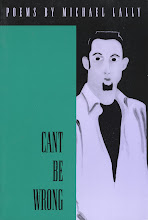
LIFE OF JACKIE ROBINSON, THE (this came out when I was a kid and Robinson was still playing for the Dodgers; I was so impressed with his dignity and heroic perseverance in the face of the widespread and often legal racism of those times, it changed my life, literally, headed me in a direction there was no turning back from (I wrote about that in the poem “Sports Heroes, Cops, and Lace” in CANT BE WRONG) and LADIES AND GENTLEMEN, MR. LEONARD COHEN (a 1965 black and white documentary about Cohen when he was still just a poet, that also changed my life: it helped me make the decision to stop playing music professionally and concentrate totally on my own poetry!)
MONTEREY POP (like I said in a previous post, full of mostly terrific music and a great take on the real “Summer of Love”) and MAN IN THE WOODS: THE ART OF RUDY BURCKHARDT (great documentary on a friend and great photographer and filmmaker, directed by poet Vincent Katz and Vivien Bittencourt)
NO DIRECTION HOME (I wasn’t entirely crazy about Scorcese’s take on what made Dylan tick in his heyday, e.g. there wasn’t much focus on the effect certain drugs had on him although watching the footage from the period it was clear how great a role those drugs played in his development, or lack of it)
OCTOBER/TEN DAYS THAT SHOOK THE WORLD (Russian Revolution, obviously)
PARIS IS BURNING (an amazing take On African-American men who dress up as women and “vogue” at their annual ball in runway competitions, etc.—it inspired the Madonna song and craze, but the real thing is so much more poignant and, well, real)
Q?
ROGER & ME (what can I say, I love Moore’s movies)
SORROW AND THE PITY, THE (in my opinion this black and white documentary about participants in World War Two by Max Ophuls is the greatest documentary ever made, but then I saw it on the big screen when it first came out, and I was born at the beginning of that war and had two older brothers in the service during it) and SEVEN UP! (a black and white documentary by Michael Apted that began the series which follows the lives of a group of British school kids, checking in every seven years—SEVEN AND SEVEN, 21 UP, 28 UP, etc.—to see what effect class and family background has on the ways their lives unfold; the series is like an unending film, as close to watching your own kids grow up as any work of art has ever been, and as such it is often uncomfortable to watch, but also fascinating and, I find, more rewarding than any other film I can think of in the long run, these people have become an integral part of my own life through this amazing ongoing lifelong documentary), SAY AMEN, SOMEBODY (great Gospel documentary) and SICKO
THELONIOUS MONK: STRAIGHT NO CHASER (as close as we’ll ever get to the real Monk, outside his music, and in my estimation he is the singular most original genius of jazz music), TO LIVE AND DIE IN MADRID (I’m pretty sure that was the name of a black and white documentary I saw in the 1960s about the Spanish Civil War that had a great impact on me, especially the scenes, real footage, of huge crowds of citizens of Madrid greeting the Loyalists with their closed-fist salute at the beginning of the film, and at the end—as Franco’s forces march into the city—similar crowds of citizens lining the streets to greet the Facists with their stiff-armed, hand-extended, palm-down salute, it made me wonder how many of these people were the same ones) and THIS IS ELVIS (a mixed bag but worth it for the early Elvis footage, as well as the sad late stuff)
U?
V?
WHATEVER HAPPENED TO KEROUAC? (a documentary by the poet Lewis MacAdams about the man), WHEN WE WERE KINGS (great documentary on Muhammed Ali when he was becoming the most famous man in the world) and WOODSTOCK
X?
Y?
Z CHANNEL: A MAGNIFICENT OBSESSION (about the channel I, and most people working in Hollywood, watched to see movies before videos and hundreds of cable channels became common)
Meanwhile, Ray DiPalma suggested I do a list of documentaries, and sent one of his own to me, Doug Lang, and Tom Evans, who all in turn made ones of our own, and a lively e-mail discussion of documentaries ensued.
So there was no way I wouldn’t fall asleep last night making an alphabet list of my favorite documentaries, as I could recall them (with the help of those lists and e mails in my memory):
ATOMIC CAFÉ, THE (great half-campy ‘50s collage) and AMERICAN DREAM (great “recent”—’80?—labor documentary)
BOWLING FOR COLUMBINE and BROOKLYN DODGERS: THE GHOSTS OF FLATBUSH (both of these films are heartbreaking to me)
CRUMB and CHARLIE MINGUS: THE TRIUMPH OF THE UNDERDOG (two uncompromising looks at two uncompromising geniuses)
DOGTOWN AND Z-BOYS (the favorite documentary, most days, of me and both my sons, about the origins of modern skateboarding in Santa Monica, where my older boy went to middle and high school and surfed and skateboarded, and where my little one was born and lived briefly on the street used in the first slalom style skateboarding of the 1970s shown in the film, it’s incredibly well done and in your face and possibly the only documentary to have footage of, and interviews with the still living creators of, an “art” form as it was being born! You have to see it!) and DON’T LOOK BACK (the first documentary on Dylan, that caught him in at least one scene being the not-so-nice guy I encountered in the Village before he was famous, but whose musical geniuss I eventually acknowledged, admired, and was inspired by and still am)
END OF THE CENTURY: THE STORY OF THE RAMONES
FAHRENHEIT 9/11
GOD’S WARRIORS and GIMME SHELTER (the death of the spirit of “the Summer of Love” came in December 1969 at Altamont Speedway where Mick Jagger’s deal with the devil was paid for—uh, maybe that’s too harsh, but it didn’t seem like it at the time)
HUBERT SELBY JR.: IT/LL BE BETTER TOMORROW (too many celebs and talking heads that didn’t really know him that well, but several who did and share great takes on him and his work, but more important, are the precious sequences of Selby reading his work—including in a weekly reading series I co-ran in L. A. (uncredited) that he religiously read at every week along with other regulars—and being interviewed or just doing his laundry, it captures what made him so unique, and—full disclosure—I’m in it for a few seconds) HAIL! HAIL! ROCK’N’ROLL (the Chuck Berry documentary Keith Richards thankfully got made)
INCONVENIENT TRUTH, AN
JAZZ ON A SUMMER’S DAY (a great black and white look at some real people in the 1950s, as well as some great music, including that amazing solo by Anita O’Day I mentioned on a very early post about her passing) and JAZZ (the Ken Burns documentary that’s mostly great, with a few exceptions, including leaving out the young Bing Crosby who even Louis Armstrong admitted had a clear impact on early jazz)
KIDS ARE ALRIGHT, THE (The Who documentary)
LIFE OF JACKIE ROBINSON, THE (this came out when I was a kid and Robinson was still playing for the Dodgers; I was so impressed with his dignity and heroic perseverance in the face of the widespread and often legal racism of those times, it changed my life, literally, headed me in a direction there was no turning back from (I wrote about that in the poem “Sports Heroes, Cops, and Lace” in CANT BE WRONG) and LADIES AND GENTLEMEN, MR. LEONARD COHEN (a 1965 black and white documentary about Cohen when he was still just a poet, that also changed my life: it helped me make the decision to stop playing music professionally and concentrate totally on my own poetry!)
MONTEREY POP (like I said in a previous post, full of mostly terrific music and a great take on the real “Summer of Love”) and MAN IN THE WOODS: THE ART OF RUDY BURCKHARDT (great documentary on a friend and great photographer and filmmaker, directed by poet Vincent Katz and Vivien Bittencourt)
NO DIRECTION HOME (I wasn’t entirely crazy about Scorcese’s take on what made Dylan tick in his heyday, e.g. there wasn’t much focus on the effect certain drugs had on him although watching the footage from the period it was clear how great a role those drugs played in his development, or lack of it)
OCTOBER/TEN DAYS THAT SHOOK THE WORLD (Russian Revolution, obviously)
PARIS IS BURNING (an amazing take On African-American men who dress up as women and “vogue” at their annual ball in runway competitions, etc.—it inspired the Madonna song and craze, but the real thing is so much more poignant and, well, real)
Q?
ROGER & ME (what can I say, I love Moore’s movies)
SORROW AND THE PITY, THE (in my opinion this black and white documentary about participants in World War Two by Max Ophuls is the greatest documentary ever made, but then I saw it on the big screen when it first came out, and I was born at the beginning of that war and had two older brothers in the service during it) and SEVEN UP! (a black and white documentary by Michael Apted that began the series which follows the lives of a group of British school kids, checking in every seven years—SEVEN AND SEVEN, 21 UP, 28 UP, etc.—to see what effect class and family background has on the ways their lives unfold; the series is like an unending film, as close to watching your own kids grow up as any work of art has ever been, and as such it is often uncomfortable to watch, but also fascinating and, I find, more rewarding than any other film I can think of in the long run, these people have become an integral part of my own life through this amazing ongoing lifelong documentary), SAY AMEN, SOMEBODY (great Gospel documentary) and SICKO
THELONIOUS MONK: STRAIGHT NO CHASER (as close as we’ll ever get to the real Monk, outside his music, and in my estimation he is the singular most original genius of jazz music), TO LIVE AND DIE IN MADRID (I’m pretty sure that was the name of a black and white documentary I saw in the 1960s about the Spanish Civil War that had a great impact on me, especially the scenes, real footage, of huge crowds of citizens of Madrid greeting the Loyalists with their closed-fist salute at the beginning of the film, and at the end—as Franco’s forces march into the city—similar crowds of citizens lining the streets to greet the Facists with their stiff-armed, hand-extended, palm-down salute, it made me wonder how many of these people were the same ones) and THIS IS ELVIS (a mixed bag but worth it for the early Elvis footage, as well as the sad late stuff)
U?
V?
WHATEVER HAPPENED TO KEROUAC? (a documentary by the poet Lewis MacAdams about the man), WHEN WE WERE KINGS (great documentary on Muhammed Ali when he was becoming the most famous man in the world) and WOODSTOCK
X?
Y?
Z CHANNEL: A MAGNIFICENT OBSESSION (about the channel I, and most people working in Hollywood, watched to see movies before videos and hundreds of cable channels became common)
Wednesday, August 22, 2007
THE DAILY SHOW
Have you been watching John Stewart lately? The faux correspondent, I think his name’s something like Rob Rickle, an actual veteran who served in Iraq, is reporting from Iraq—really, not faking it like they usually do—with real troops in the field, and revealing more truth about that folly and what “support our troops” really means than any “real” news report or rightwing supporter of this war ever has.
And tonight Stewart had on Barak Obama, who impressed me more than he has in a while. I’m beginning to believe, even if I still have some doubts that he can actually do it.
But it’s the reports from Iraq that are scoring, that and Stewart’s bit tonight on “America to the Rescue” and how we had to give all these billions in and for arms to the Saudis to balance the power of the Iranians, “because twenty percent of the 9/11 suicide attackers were not from Saudi Arabia” so nothing to worry about, and that rattled the Israelis so we’re increasing our military largesse to them by billions, and then he went into the enemies we now have and how we did the same things for them, like supplying weapons to Iraq to balance out Iran in their war, to supplying Bin Laden and the Taliban with weapons to fight the Russians.
He could have gone back even further, to our government supplying Iran with weapons after overthrowing their democratically elected leaders back in the 1950s. In fact, he could have gone on all night tracing back all the mistakes made in foreign policies helping dictators and oligarchies that eventually fall and are replaced by regimes that hate us for our support of these dictators and oligarchies and end up with the money and weapons we supplied the previous regimes with, etfuckingcetera.
I wish you had seen it, if you didn’t. But they’ll replay it and it’ll probably be available on the web pretty quickly. Check it out tomorrow night if you can, I’m sure they’ll have another report from Iraq that’ll tell some truths nobody else is addressing, or at least not addressing realistically. In fact all the humor tonight was in the honesty of the report, our troops in the field saying how “happy” they were about the Iraqi politicians taking a month’s vacation, getting to spend more time with their families, etc. while the troops stay and as one soldier put it “hold down the fort, because this actually is a friggin’ fort.”
And tonight Stewart had on Barak Obama, who impressed me more than he has in a while. I’m beginning to believe, even if I still have some doubts that he can actually do it.
But it’s the reports from Iraq that are scoring, that and Stewart’s bit tonight on “America to the Rescue” and how we had to give all these billions in and for arms to the Saudis to balance the power of the Iranians, “because twenty percent of the 9/11 suicide attackers were not from Saudi Arabia” so nothing to worry about, and that rattled the Israelis so we’re increasing our military largesse to them by billions, and then he went into the enemies we now have and how we did the same things for them, like supplying weapons to Iraq to balance out Iran in their war, to supplying Bin Laden and the Taliban with weapons to fight the Russians.
He could have gone back even further, to our government supplying Iran with weapons after overthrowing their democratically elected leaders back in the 1950s. In fact, he could have gone on all night tracing back all the mistakes made in foreign policies helping dictators and oligarchies that eventually fall and are replaced by regimes that hate us for our support of these dictators and oligarchies and end up with the money and weapons we supplied the previous regimes with, etfuckingcetera.
I wish you had seen it, if you didn’t. But they’ll replay it and it’ll probably be available on the web pretty quickly. Check it out tomorrow night if you can, I’m sure they’ll have another report from Iraq that’ll tell some truths nobody else is addressing, or at least not addressing realistically. In fact all the humor tonight was in the honesty of the report, our troops in the field saying how “happy” they were about the Iraqi politicians taking a month’s vacation, getting to spend more time with their families, etc. while the troops stay and as one soldier put it “hold down the fort, because this actually is a friggin’ fort.”
Subscribe to:
Comments (Atom)