"The heart stops briefly when someone dies,
a quick pain as you hear the news, & someone passes
from your outside life to inside. Slowly the heart adjusts—Ted Berrigan from "Things to do in Providence"
just another ex-jazz-musician/proto-rapper/Jersey-Irish-poet-actor/print-junkie/film-raptor/beat-hipster-"white Negro"-rhapsodizer/ex-hippie-punk-'60s-radical-organizer's take on all things cultural, political, spiritual & aggrandizing
"The heart stops briefly when someone dies,
a quick pain as you hear the news, & someone passes
from your outside life to inside. Slowly the heart adjustsMy two sisters and I slept in the "finished" (unpainted sheetrock) part of the attic when I was a boy, and they were forced to drag me along to the movies on weekend days until I was eight or nine and allowed to go by myself (!). Both sisters played piano, and I pestered my parents until they got me lessons at four. Joan eventually gave piano up, but Irene and I didn't. I have so many sweet memories of those early years with Irene and me.
When she graduated high school she joined a cloistered nunnery and stayed for four years until just before her final vows when she returned to her "cell" to find a cat-'o-nine tails on her bunk and called our father to come get her. Even though I was five years younger than her, my mother knew I was already more experienced so asked me to look out for her, and I did.
We had a few spats over the decades, but mostly we were loving to each other. From what I could tell, she loved her life up until only months ago when she woke up one day mostly blind. And then more of her started breaking down and life became extremely challenging. Last time we talked, it was clear she was done but would tough it out.
She was my last sibling still living. Now I'm the only one left. But they all live on in my memories and heart. Love to her children and grandchildren and all her family and friends.
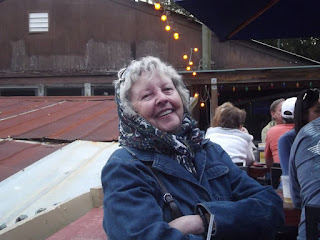
Here's my favorite recent photo of Irene. Still the same smile.
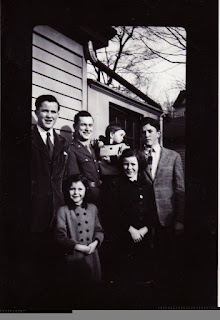
There's been snow on the ground since just after Xmas at my new home in upstate NY, reminding me of my boyhood winters when snow would arrive sometime in later November or early December and stick around until Spring. Which reminded me of all the seasons of my boyhood, especially the summers I spent down the Jersey shore in Belmar. Here I am with a few of the Lally clan in the late 1940s.
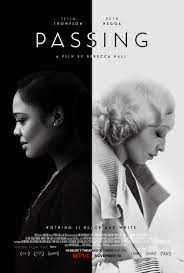
Back row my mom, Aunt Peggy and Aunt Rose; middle row my cousins Rod and Rosemary and sister Joan; bottom row me, my sister Irene and cousins Kathi and Micki.The performances from the leads—Tessa Thompson and Ruth Negga—are stunningly complex. Though other actors may have been more believable as the kinds of people who historically "passed," casting these two reinforces the absurdity of the whole racial categorization obsession in this country and during this period in particular.
Director/writer Rebecca Hall, one of my favorite actors, allows all the performers to have their moments so that everyone in the film is memorable. The cinematography and editing as well. It's not an easy film nor completely satisfying (to me), and like the other two elicits strong opinions for and against, but I'm glad I watched it.
Don't remember where I copped this from but totally cool new year resolutions from woody guthrie:
When I met Yvette Mimieux in 1985 on the set of BERRENGER'S, I thought she was much older than me because I still remembered being moved by her performance in WHERE THE BOYS ARE in 1960 when I was 18 and she was already a movie star. But her obituaries say she was 80, as I will be in a few months, so we were actually contemporaries.
She was the star power for BERRENGER'S and my character, a bad guy sweat shop owner in the fashion industry, was a bit part on the first episode that became a recurring role on every episode of the short lived series (a victim of a network vs studio feud). But it was a great time for me. Shot mostly on a soundstage at MGM (though my sweatshop scenes were in a downtown LA garment manufacturer's loft) the thrill of being waved through the MGM gates and into a studio lot with my own parking space evoked every Hollywood film I'd ever seen with scenes of actors trying to crash some studio's gates.
And for at least one season, my name was in TV Guide every week, I was nominated for best newcomer by some primetime soaps fan magazine, and was asked for signed headshots that were mounted along with others behind the meat counter at Mrs. Gootch's and my local dry cleaners, and had paparazzi flashing cameras at me outside Hollywood hotspots. And I got to work with a great cast, some of whom became dear friends.
I didn't have any scenes with Mimieux, but we talked a few times and I, along with everyone else who worked on the show, received a gift from her when it was cancelled. She was always gracious and warm and unpretentious and beautiful and somehow modestly glamorous. I feel humbled and honored to have known her. Condolences to her family, friends, and fans.
I admire Maggie Gyllenhaal's fearless approach to her art. Her commitment to what I take as her vision of the truth of a character she plays as an actor, or characters she guides as a director, always strikes me as fierce. As it does in THE LOST DAUGHTER. The challenge is her interpretation of Elena Ferrante's vision of the characters she created in the novel Gyllenhaal wrote the screenplay for. The Italian novelist gave Gyllenhaal permission to do it her way, but for me, the transformation of a story whose characters all share the same dark Neapolitan history to one whose characters come from more dispersed and unrelated backgrounds created a feeling of something missing. All the terrific performances, the radical cinematography, and the bold direction left me impressed but dissatisfied. And the seeming ambiguity of the (also altered) ending only added to that. Worth watching for the artistry, but frustrating for me.