Monday, May 31, 2010

SPECIAL RELATIONSHIP


What this HBO movie does for Memorial Day, to my mind, is remind us how to avoid (or at least reduce) casualties of war.

It's about the "special relationship" between Britain and the USA as demonstrated in the history of the special relationship between Bill Clinton and Tony Blair.

There's a lot of verbatim historical dialogue and speeches etc. as well as imagined private conversations that mostly come across as plausible given the people involved and the circumstances they're in.

Blair is played by Michael Sheen who also played Blair in THE QUEEN and is good at it. Clinton is played by Dennis Quaid and though he's obviously doing his best, and gets Clinton's speech patterns and mannerisms down pretty well, he misses what's so charming and personable about Clinton that made him so popular and successful, Clinton's famous charisma that made world famous movie star friends of mine who met him say they got weak in the knees. Quaid doesn't have that.

Plus he plays Clinton's superior energy, mastery of details, incredible intelligence (except in private matters obviously) more like overbearing seriousness and bullying. It doesn't work, not for me. (Quaid's personality seems much more suited to playing "W." than Clinton).

But Hope David is incredible as Hilary. Nails her intelligence, her toughness, her tenacity and unexpected insecurity perfectly. A really nuanced but brilliant performance.

If you get HBO or if it becomes available otherwise it's worth checking out just for the opportunity to get some other angles on the Clintons and that whole period of history. But I bring it up today because one of the things Clinton doesn't get credit for that bugs me is his capacity to avoid or defuse almost any major crisis that occurred on his watch (except for the personal ones obviously).

It is said that he would have gone down as one of our greatest presidents if he hadn't presided over a period of peace and prosperity. But he had something to do with that peace and prosperity. Crisis after crisis occurred on his watch that he handled so well they never blew up into the kinds of catastrophes Bush Junior created by bungling the crises that occurred on his watch.

For example, when it looked like all of Asia was going to collapse financially which would have led to a worldwide financial crisis, Clinton made exactly the right moves to avoid it (while rightwing Republicans squealed, as they did when he bailed out Mexico in their financial collapse with enormous loans that the Republicans said would never be paid back but were with interest etc.).

Don't forget the first Twin Towers attack occurred while Clinton was president, the bomb in the basement parking lot. Not only did Clinton's team find the mastermind and those who carried it out but he brought them to trial with no problem, not turning them into martyrs and symbols of resistance but instead into common prisoners serving their time etc.

He also put people in charge of FEMA that made it run more smoothly under his administration than under any other in recent history (and they had major natural disasters to contend with just like now, hurricanes and fires etc.—my oldest child, my daughter, lost everything in a fire in Southern California that destroyed thousands of homes and businesses and etc. and FEMA was not only there almost immediately with help, they cut her a check to help her start over before, at least the way it seemed, before the embers were hardly cold. etc.).

But the main one for this day is he managed to stop the war in the Balkans and then get Serbia to stop the violence against Kosovo and bring that conflict to an end without any "American" troops dying, preventing a wider war and more deaths. For this he isn't remembered as "great" but as lucky. I wish I had his luck.

Anyway, SPECIAL RELATIONSHIP gets some of this history correct, even if Quaid's (and the writers' and director's and producers') Clinton is more a brooding ex-quarterback than one of the smartest presidents we've ever had.

(And no need to point out what he didn't accomplish or compromised on or neglected. Which all may be true. But he was really fighting "a vast rightwing conspiracy" as well as the usual entrenched corporate and political interests and still managed to change most things in this country for the better during his time in office as opposed to his successor.)

Sunday, May 30, 2010

ESKOW'S ANALYSIS (THE PRESIDENT'S RESPONSE TO THE BP OIL FIASCO)

As always, my good friend RJ Eskow on his Huff Post contributions and his own blog NIGHT LITE always gets it right and often more clearly than a lot of other commentators. Like on this post.

Saturday, May 29, 2010

DENNIS HOPPER R.I.P.


I met Hopper a few times during my years in Hollywood. He always seemed like a pretty nice man to me. Though there was a period when for whatever reason people started saying I reminded them of him, and once in a bar a drunk insisted I WAS Hopper and trying to not be noticed.

I have to admit, I didn't like being compared to him in any way, looks or acting. Because I wasn't crazy about Hopper, the actor, for a long time.

When I was a kid and first saw him in REBEL WITHOUT A CAUSE, my reaction was that he didn't look like any teenager I knew, and that I didn't like the way he looked or acted in that flick anyway.

As I got older and saw him in other movies, and on TV, I still didn't enjoy watching him on screen as I did other actors.

Then came EASY RIDER and I liked him even less. I had objections to the ways in which people I thought I knew pretty well, or their type, were portrayed in the film. But of course I dug the soundtrack and aspects of the film, like Jack Nicholson's star-making performance, a lot more than I did Hopper's character and screen presence.

Like I said, in person I found him to be a pretty regular guy, but somehow on screen he always bugged me. Until I saw him in 1977 in THE AMERICAN FRIEND (or DER AMERIKANISCHE FREUND), directed by one of my favorite directors, Wim Wenders, and starring one of my favorite movie actors, Bruno Ganz. Somehow, what usually bothered me in Hopper's screen presence and performances didn't in this movie and I could finally see something I could dig in his acting.

After that there were plenty of Hopper performances I could dig, even during the years I would run into him here and there in Hollywood (I assume you get when I use that term I mean the movie and TV business around L.A. in general). Like HOOSIERS or BLUE VELVET. Even during those few years when for some reason people kept saying how much we looked alike, as much as that bugged me I still could dig his performances.

In fact at one party we talked for a while about being taken for each other. I don't know if he was humoring me or meant it, but he made it seem like it happened to him as often as it was happening to me at the time. Like I said, he always came across to me as a pretty regular guy, although I heard stories from friends who spent more time with him in working situations (films) or socially, and they had other experiences.

The main thing about him, to me, is that he managed to survive such a competitive and cut throat business with some kind of artistic integrity intact. After all he was on TV and in movies as far back as 1954 and as recently as, well, his latest performances haven't even been released yet. And the amount of roles he played, phew, puts Michael Caine to shame.

The man was a survivor. Until now. And even then. For a guy who lived the life, 74 is more than a lot of us might have expected. And as much as his last days were tabloid drenched in his impending will problems, he had an enormous impact right up until the end on our culture and consciousness. May he rest in peace indeed.

Friday, May 28, 2010

A LOT OF ANGST OUT THERE

I was talking to someone who thinks the world has never been in worse shape. I tried to give them some perspective.

At the start of WWII, most of the world still hadn't recovered from The Great Depression, Japan had wiped out almost the entire U.S. Navy fleet and taken over most of the Pacific and much of Asia, Germany was successfully taking over Europe and looking like it was on its way to conquering England and The U.S.S.R. And war was raging all over the globe. Not to mention concentration camps were being filled and "the final solution" being honed.

Nothing close to that (in terms of numbers) going on now. Even in the worst places on Earth.

In the 1960s, some rivers in the USA were so polluted they caught on fire (the famous Cuyahoga in Ohio) and/or nothing was able to live in them and humans couldn't swim in them or even put their hands in them. A whole lot of people were dying in Southeast Asia for what turned out to be no really good reason (a lot more than are dying in Afghanistan and Iraq). And people were dying in the USA over political differences so fierce it looked like another Civil War might be possible. Dying of hunger and malnutrition too.

Not to even get into The Civil War period. Slavery anyone?

Yes, there are a lot of things wrong in our world today, and the impact of global warming and the resistance to accepting the reality of it certainly bodes ill for certain aspects of life as we know it on this planet (including entire species). And the threat of "terrorism" (i.e. violence perpetrated by people not affiliated officially with a nation, or by nations not accepted as legitimate by other nations, etc.) is real, as is the financial problems caused by several things (including global technology outpacing the ability to police it and profiteering by soulless corporations and individuals etc.)...and war (the fighting in the Congo is as close as we get to WWII volume casualties) etc.

Lots of situations and circumstances to be concerned about, absolutely. Injustice and inequality, especially for women in a lot of the world. Some places going backwards in terms of scientific and humanistic progress, etc. And it's right and good to work to alleviate the pain and suffering of victims of these situations and circumstances and to correct the record so that solutions are based on reality and not propaganda (that's a tough one in this age of non-accountability for outright lying in most of the media, but then it's still better than the tactics used by the Nazis and the Stalinists etc.). All that and more is true.

But in the end, it certainly is no worse than previous times. But wait, you say, the earth is in jeopardy because of ecological threats from global warming and corporate irresponsibility and technological and scientific discoveries going beyond what is safe (genetically altered food, the ability to create life out of chemicals, etc.) That's true. But in the 1950s most people believed the world might come to an end at any moment from nuclear holocaust, as they called the possibility of the USSR and the USA using "mutual destruction" to solve, well not solve, but end, literally, their problems with each other...etc.

A lot of good reasons to work and fight to change things for the better, but no cause for despair, if only because it's counter productive if you want to help in changing things for the better.

Thursday, May 27, 2010

Wednesday, May 26, 2010

PRINCESS NOIRE (THE NEW BIOGRAPHY OF NINA SIMONE)


The book is subtitled "The Tumultuous Reign of Nina Simone"—which tells you what its emphasis is.

I fell in love with Simone's music in my teens as she was just beginning her ascent into the realm of unique music creators. I was beginning to play a little professionally and considered myself a "jazz musician" at the time (the late 1950s and early '60s).

Other—especially older—musicians would argue that her technique was sloppy and inconsistent, basically throw in some classical style keyboard length runs, mix with some blues and jazz riffs and trills, build to a crescendo, and sing almost monotone but emotionally fraught.

But I dug the ways she mixed things up, resisted the simpler classifications. Plus I identified a lot with her technical limitations (her critics, including some quoted in this book gave her credit for classical training but saw her skills in that genre as not of the highest order, and saw her blues cred diluted by her classical input and jazz cred compromised by her folk and classical influences, etc.).

She saw herself initially as a classical performer limited by racism from achieving the heights of classical stardom she dreamed of as a child in the segregated South being taught and promoted by a kindly older "white" classical piano teacher.

Mostly I found Simone's unique personality as expressed in her music beguiling and seductive in those early days. And then things changed. Not just in terms of "the sixties" and all the political and social turmoil, as well as the elevation of first folk and then rock'n'roll to more formidable art forms and avenues for political expression etc., but more importantly, for Simone, the great changes in "race relations" and the impact of the Civil Rights movement in its "Black Power" phase.

She latched onto that momentum and contributed to it as, for example, with her composition "Mississippi Goddamn" which became one of her most widely recognized achievements. But she also expanded her diva-ness to incorporate her rage over real and imagined racial and other slights.

As Nadine Cohoda, her biographer for PRINCESS NOIRE makes clear, there was more going on than just political and artistic changes. Simone seems to have had some serious mental problems as well. The author speculates that it was early signs of bi-polar disease that caused many of the incidents that turned not just managers and agents and bookers and night club proprietors and sometimes even audiences off, as she would show up hours late for gigs or walk off the stage if someone in the audience did something she didn't like or the audience didn't respond the way she wanted them to etc.

But a lot of later incidents sound as much the result of a drinking problem, to me, as anything else (though that may just have been Simone self-medicating). Whatever you attribute it to, she definitely became difficult for almost everyone who encountered her. I didn't know much about these things as I just lost interest in her musically in later years. What I heard just didn't, for me, hold the magic and mystery of her earlier work, but instead seemed pointedly self-aggrandizing in ways that simply turned me off.

But I never stopped loving her early recordings and listen to them still. So I read this new biography with great interest. It left me with some more knowledge of the details of some of her travails, but with not much more insight into them than I already possessed, and the writing is passable but not as exciting or attention grabbing as Simone's music.

If you love Nina's music and think of her fondly, it might be better to skip this bio and stay with your own impressions. But if you're interested in finding out more about her and have an interest in the cultural history of the 1950s and '60s, in particular, you'll find enough here to maintain your interest. I did. Just not enough to completely satisfy it .

Tuesday, May 25, 2010

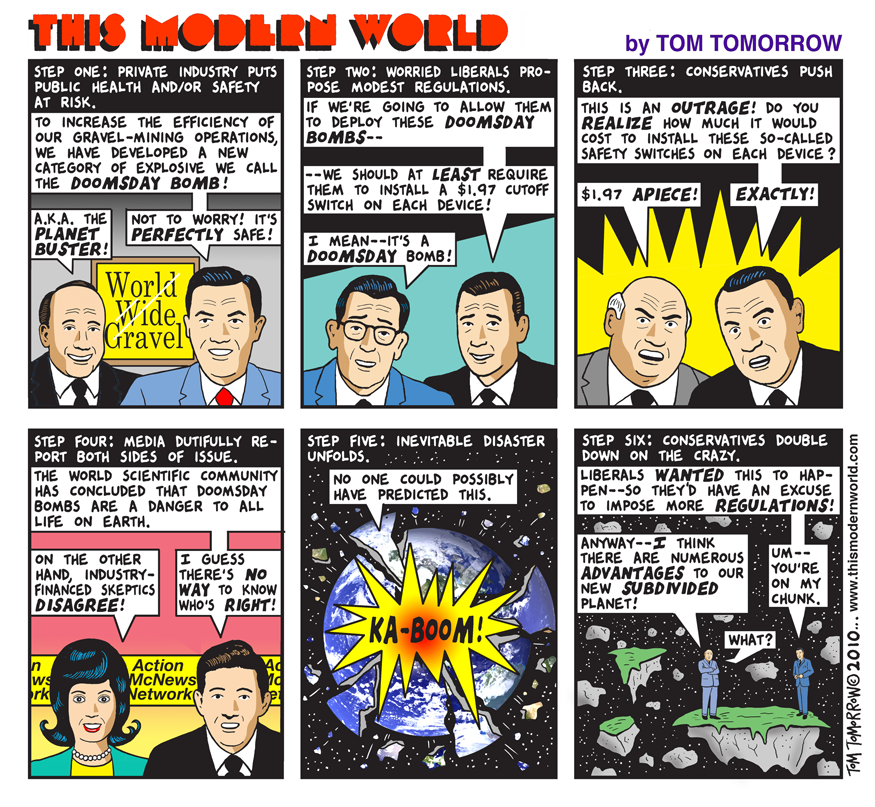
WOODY'S WISDOM (NO MATTER WHAT YOU THINK OF HIM, THIS IS PRETTY FUNNY)


[PS: As always, you can click on the image to make it bigger.]

[PPS: Thanks to Elaine Durbach for hipping me to this, and a nod to F. Scott Fitzgerald, etc.]